Showing posts with label sea. Show all posts

Wednesday, 5 April 2017

Poetry and Pinhole Photography at Arlington's Poetry Cafe

Jaywick Martello Tower

This Martello tower...
solid, strong and undefeated

from 'The Rifleman's Ghost' by Judith Wolton


I attended the April gathering of the Ipswich Poetry Cafe last night. Essex poet, Judith Wolton, and photographer, Alan Hockett, treated us to a presentation of poetry and pinhole-photography from the Essex coast. I am always fascinated by the extra spark of creativity that is invariably produced when two dedicated practitioners collaborate on a project.

The shared work had resulted in a book, Words from the edge and other Drosscapes (Estuarine Press, 2016), in which Judith's evocative poems complement Alan's striking pinhole photographs.

Judith's poems, springboarded into being by Alan's images, feature mythology, topography, local culture, birds, barges, batteries and narratives of the imagination. I love the way in which old buildings like the Playdrome have been given personalities. In 'This old show girl' we find the 'old dame' of a building with...

her lipstick smudged,
her wrinkles showing

It was fascinating to learn a little about Alan's practice as a pinhole photographer. Some of the swirling effects were achieved by shaking the chemicals during the development stage. Apparently the photograph failure rate is quite high, but for every few failures, an experienced pinhole photographer like Alan can achieve a couple of stunning and unique images. I came away still not quite sure whether his recycling bin was actually as full of old bean cans as he would have us believe! If you click this link you will see how to make a camera from a Coke can. There are secrets that can be (and indeed were) shared, but it is surely a good thing in art when the viewer feels that some dots have been left unjoined. The photographs themselves have a misty, ethereal quality about them, somewhat reminiscent of the paintings of John Atkinson Grimshaw or perhaps works in Whistler's series of Nocturnes. 

I was struck by how different, how very different, the chosen places were to the leafy inland areas of Suffolk and Essex that comprise Constable Country, especially when you realise that Manningtree (which features in the book) and Flatford are near neighbours on the map. Essex has a wild and windswept coastline, haunted by pirates (and at this point Baring-Gould's Gothic novel, Mehalah, comes to mind), ghost boats and rusting bolts of iron.

Appearances can be deceptive to the traveller, but those with local knowledge and an artist's eye are less easily fooled into believing that the drosscapes presented in the volume have had their day. Piers and cranes may have become bare skeletons, but the tide is constantly re-shaping, recreating, the coastline – a process mirrored in the work of Judith and Alan. These artists have given a sense of new life to some of the forgotten stretches of shore along the county's zigzagging sweep of 350 miles.

Essex Coast

Monday, 21 September 2015

keeppoemsalive: a selection of poems about 'Time'

...

My Tercet Ghazal, 'The Ocean's Tears', features in the relatively new keeppoemsalive site this week. The site is described as 'a space for poems you like to read again and again.'

Other poets with work featured this week are Kevin Cadwallender, Neil Leadbeater, Alexander Hutchison and Vivien Jones.

All the poems on the site were published for the first time at least three years ago. Do click the link above and take a look.

Wednesday, 8 April 2015

Tanka selected for Exhibition


I am delighted that my Tanka about a piece of sea-glass has been selected for The Colour of Poetry exhibition. Submitted Tanka had to be suitable for a hospital environment. Visual artists will use colour to express their emotional response to each poem selected for the exhibition and the two pieces - artwork and poem - will be exhibited together in the Northern Health and Social Care Trust.

Saturday, 11 October 2014

Poetry Workshop at Writers' Centre Norwich


I have just returned from an excellent afternoon at Writers' Centre Norwich. The poetry workshop was the first of two, with one session on the coast (today), led by Rebecca Goss, and the other on the land, which will be led by Esther Morgan

I have come back with the beginnings of three poems, and am looking forward to taking these further. Writers' Centre Norwich is a wonderful resource, and we were amused to find that the packets of biscuits on offer bore the name of Brontë!


Postscript
On my return, David mentioned that Sir Andrew Motion had released his 10 Tips for 'being a successful poet'. You can read them here

Tuesday, 19 March 2013

Poetic People: Kathleen Jamie in Conversation with Lavinia Greenlaw at UEA

Lavinia Greenlaw introduces Kathleen Jamie ...

... at UEA (the University of East Anglia, Norwich, UK).

David and I attended a riveting poetry reading at UEA last night as part of the UEA Literary Festival. Kathleen Jamie, winner of the 2012 Costa Poetry Award, read a number of poems, many set in Scotland and the islands, from her new sparkling poetry collection, The Overhaul. We rapidly found ourselves in a world of Bottlenose Dolphins, Basking Sharks and Red Deer stags.

Kathleen, who said she was usually drawn to birds and animals on account of the fact that these creatures catch our eye when they move, also included three memorable flower poems. Kathleen was described by Lavinia Greenlaw as 'attentive' (to the natural world) but never 'attention-seeking', an attribute shared perhaps by the small blue bell-shaped flower in one of the poems. 

There was a fascinating conversation on the subject of engagement with the natural world, and how perhaps the poet sees her own approach as a thing apart from the more traditional Romantic notions of the all-seeing viewer-writer. Kathleen spoke wistfully of what might have been an awakening or flowering of a new phase in writing about the natural world. She gave the impression that in her view it was a wave that began to roll but perhaps failed to gather sufficient momentum. Perhaps it has yet to reach its zenith. I, for one, hope that this is the case, for it seems to me that there is an increase in 'wild' writing that balances 'engagement' with 'inhabitation', allowing the world (in Kathleen's words) 'space to be its own thing'.

Kathleen concluded that we engage with the natural world, 'because we have to; they (i.e. the creatures and component parts of our eco-systems) need us to, to keep the channels open.'

Book-signing afterwards ... a copy of 'Sightlines'

Wednesday, 27 April 2011

Poetry Matters (18): 'Creatures of a Dead Community' by Lynn Hopkins


Author: Lynn Hopkins (picture of cover used with poet's permission)
Publisher: Peter Thabit Jones, The Seventh Quarry Press (2011), The Seventh Quarry
Photographs: Moelwyn Hopkins
Illustrations: Rhian Elin Thomas  
Price: £4.50 
ISBN: 978-0-95674547-3-6

'From a lofty bed,
two hands clasp a kernel
as if in prayer'

from 'The Grey Invader' by Lynn Hopkins

It is hard to think of Swansea without picturing the curve of the bay. It is an iconic yet ever-changing seascape that can be enjoyed from numerous angles. If we associate Peter Thabit Jones with the view from Kilvey Hill, we can now link Lynn Hopkins with those sweeping vistas from another vantage point where 'sea breezes blow', namely the hillside that 'stands in stillness', supporting Oystermouth Cemetery.
This 'dead community' has found a special place in Lynn's affections. For her the cemetery is a place of 'peace in beautiful surroundings'. It is a place that has inspired her first collection, a sparkling quiverful of twelve poems about the wild creatures that make their home around the graves. They are very much alive, and for Lynn their presence proves that 'life goes on, even in a dead community'.  
I have known Lynn for some years, although our paths have not crossed frequently. She is currently a student on the part-time humanities degree at Swansea University. It was a privilege to attend the recent launch of Lynn's volume, and to hear the poet reading her own work. Artistic acheivement runs in the family: Lynn's husband was also a published poet. It was a thrill to meet the poet's daughter, Rhian, whose delightful illustrations are the perfect complement to her mother's words and to her brother, Moelwyn's photography. It is not often that three members of a family have worked together on a project of this nature. 
Publisher, Peter Thabit Jones, adds that Lynn's poems are 'accessible, sound-textured and tender'. He makes the shrewd observation that although they are written in English, Lynn is bilingual and brings to her work that added dimension or 'sense of craftsmanship employed by poets working in Welsh.' Lynn's detailed approach is both arresting and engaging: the poet weaves her stories of the wild creatures into a compelling warp and weft of carefully chosen words. 
In this poem-sequence, we encounter the statue on the cover (see above) of a pensive woman, clutching her 'private book'. Word and image combine to conjure up a sense of the pain of loss, but they also manage to convey a fragile sense of future: the reader is encouraged to consider the possibility of a time when tears will be no more. But for the present, this woman of stone has to suffer the dubious company of her faithless feathered companions, the 'Magpie, raven, and rowdy rook'. 
The choice of vocabulary keeps the reader alert. Just when we are tempted to feel that all is tranquil and serene, with butterflies fluttering over 'this haven of rest', we are reminded that it is folly to think of this place as an entirely peaceable kingdom. Instead, we are confronted with the stark reality of the horrors of death and war and 'butchered hearts'. The black cat 'with two sides' to its face sums up this paradox to perfection.  
So thank you, Lynn, for introducing us to your new circle of companions - the snail, the 'wily' fox, the 'brown owls' on their 'brittle boughs' - and all the other cemetery dwellers. Thank you for helping us to appreciate the world around us in a new way from the perspective of a place where sea meets sky, and where heaven and earth are bound in life and death.  
If you would like to buy a copy of this captivating and lyrical collection, I suggest you follow this link to The Seventh Quarry Publications, and scroll down to the bottom of the page for contact details.


Wednesday, 28 July 2010

Magazine Moment (15): The Seventh Quarry

Swansea Bay from Mumbles,
with the Swansea-Cork ferry


I was delighted when the Summer 2010 edition [issue 12] of The Seventh Quarry arrived today, featuring an international spread of work from Wales, England, Holland, Romania, Italy, Catalonia, Israel, South Africa, Canada and America.

The magazine includes an interview with one of the leading Catalonian poets, Dr August Bover. Dr Kristine Doll poses interesting questions about the 'difficult to understand' label that attaches itself to the art of poetry.* I had the privilege of meeting August at a stimulating and memorable workshop in the Dylan Thomas Centre some months ago. Allan Peterson appears on p.5 as the issue's poet in profile.

The magazine opens with a poetry sequence including a moving piece, A Circle of Meadow, by Vince Clemente, The Seventh Quarry's Consulting Editor for America. A stylish concrete poem, Elephant, by Dave Lewis from Wales is embedded with 'memories' and 'stories' from the watering holes. Gerald England's witty contribution seems to me to combine the lazy dog pangram with a kind of abcedarium. I much enjoyed Gillian Drake's evocative poem, Lost - and am delighted that my poem, The Women of Linear B, has been included on p.11.

In Chapter 1 - Swansea Bay we are treated to an excerpt from a forthcoming Cross-Cultural Communications publication, Love For Ever Meridian; Finding Dylan Thomas in the 21st Century by John Dotson, who enjoyed 'taking in the shore-places of Dylan the boy' on a recent visit to South Wales.

The penultimate page of this issue carries a description of the latest Poet to Poet chapbook, Nightwatch by Aeronwy Thomas and Maria Mazziotti Gillan, in the series published jointly by Cross-Cultural Communications and The Seventh Quarry Press ... of which more perhaps in a future post.

Thank you, Peter, once again for another bumper edition!


* Postscript: On the subject of the meaning of poetry, there is a substantial article entitled by The Virtue of Verse by George Watson, fellow at St John's College, Cambridge in the current Times Higher Education Supplement (29 July-4 Aug 2010) - available online, with livelink highlighted above.


***

N.B. If you would like to take out a subscription
to The Seventh Quarry poetry magazine,
details can be found here.

Wednesday, 9 June 2010

Anthology Alert (5): 'Crab Lines off the Pier'

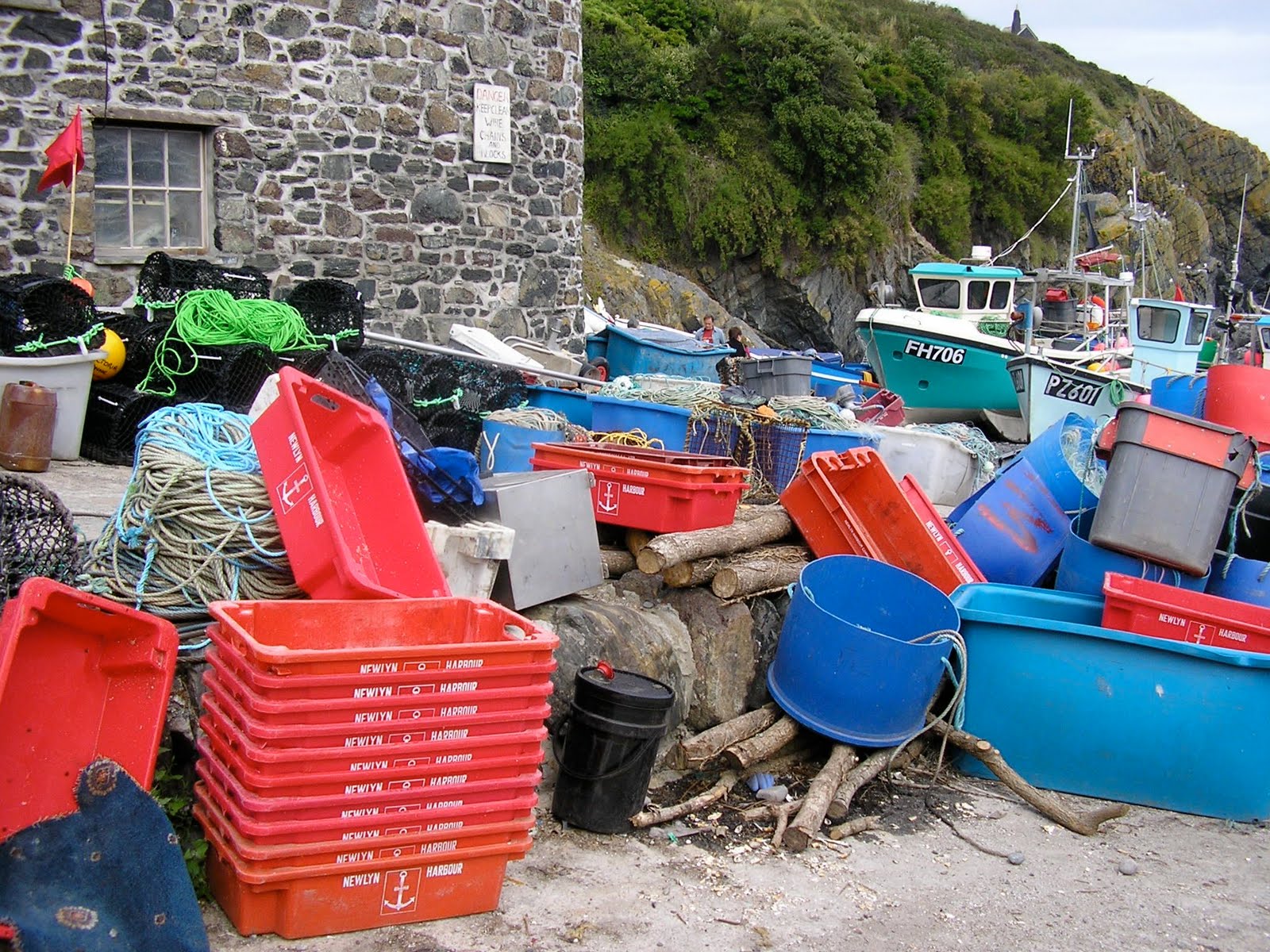
Fishing Gear,
Cadgwith

I mentioned in an earlier post that my poem 'The Ocean's Tears' had been included in Crab Lines Off The Pier, the new summer anthology from editors Ronnie Goodyer and Dawn Bauling of Indigo Dreams Publishing.

The book has just arrived, and I have much enjoyed an initial browse. Apparently there were over 600 submissions from all over the world.

As a left-hander, I tend to begin browsing from the back, and was delighted to take a trip down Memory Lane as I read Catherine Graham's evocative poem about The Hoppings on Town Moor, Newcastle. Back in 1980 during my first summer as a student, I recall the excitement surrounding the arrival of the big fair known as The Hoppings.

To switch to the other end of the country, I have much enjoyed Ronnie's beautiful and lyrical poem, 'On Crockern Tor', Dartmoor. Closer to home, 'Crabbing on the Parrog' by Tina Negus evokes those days on the beach with seaweed and muddy pools. Claire Knight's beautiful Haibun re-captures the essence of a broom-clad Cornish cliff forty years on. Gerald Hampshire prefers his crabs in Whitby, with its jet 'black silt'. Pamela Scott takes us a little further afield to Paris, while Thelma Laycock presses on for midnight in Alaska.

Do consider buying a copy to accompany you on your travels or on those 'deckchair-in-the-garden' afternoons. You can read my earlier post here; and more to the point, you can buy the book here. Thank you, Ronnie and Dawn.

And now all I need is a burst of sun!

Archeological Avenues (4): OUP - HMS Belvidera and the Temple of Minerva

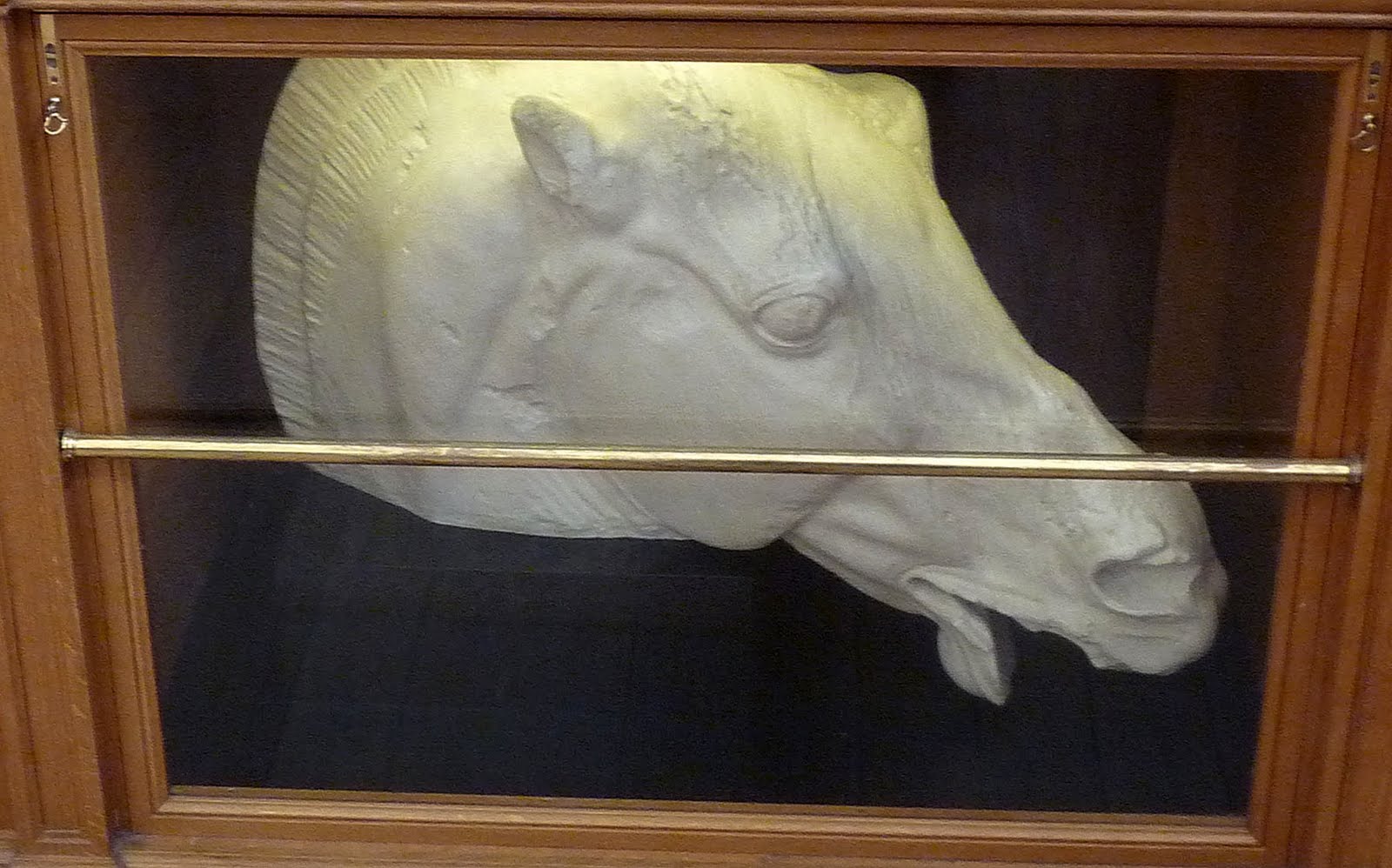
Cast of the 'Horse of Selene'
British Museum

David (Gill) and I have just received our offprints for our joint piece, HMS Belvidera and the Temple of Minerva, published by Oxford University Press in Notes and Queries. The print journal came out in June.

We consider the iconographical details on a marble book, and link these to HMS Belvidera and the Parthenon around 1832, when King Otto was crowned ruler of Greece. You may like to read my blog post here.
  • D.W.J. Gill and C. Gill, 'HMS Belvidera and the Temple of Minerva', Notes and Queries, Vol 255 of the Continuous Series [New series, Vol. 57], No.2 (June 2010): 199-210
N.B. 'Notes and Queries Advance Access' scheme: you can login via Athens if you are part of an academic community.

Thursday, 27 May 2010

Anthology Alert (4): 'Crab Lines Off The Pier'

Mumbles Pier, Swansea


I am delighted that my poem, 'The Ocean's Tears' (a Tercet Ghazal),
is to be included in the new Summer Anthology from Indigo Dreams Publishing,
Crab Lines Off The Pier (ed. Ronnie Goodyer and Dawn Bauling, IDP 2010).

Paperback : Date of Publication : 1st June 2010
Publisher : Indigo Dreams Publishing
ISBN10 : 1907401210
ISBN13 : 9781907401213
Paberback, perfect bound, 90 pages

Flotsam and Jetsam

You can read about the anthology here
on the Indigo Dreams Press website.

Breaking Waves

Orders for the anthology (£7.50 per copy plus p&p) can be placed here
on the Central Books site.


Creature Feature (16): Wildlife at Mwnt, Gwbert and Cardigan Island

Mwnt from the Cardigan Farm Park
You can just make out the white bell tower of the Church of the Holy Cross,
halfway up on the right.


We enjoyed a visit to Mwnt on the Cardigan coast of Wales last weekend.
The weather was glorious and we saw some interesting wildlife.
This was the first sign (below) we saw as we left the NT car-park at Mwnt...


This is the church in its glorious setting...


We were just enjoying our cliff-top picnic when we spotted our first seal...


After lunch we drove the short distance on to Gwbert,
to do the coastal walk around the Cardigan Island Coastal Farm Park.

We were thrilled to see this Common Lizard,
who had ventured indoors.
It was 'rehabilitated' seconds after this photo was taken.


Out on the cliffs we spotted a few Oystercatchers...


and this female Stonechat...


We spotted a Skylark ...


having watched Pipits earlier at Mwnt...


Suddenly we spotted this 'tortoiseshell' bird.
It was my first Turnstone:
an exciting moment!
The bird is sporting its breeding plumage.


By now, we could see Cardigan Island very clearly
from our gorse-lined cliff path...


I tried out my mini-tripod for the first time,
to see if I could get a steady shot of the bluebells on the island,
and of the nesting gulls.
I'm afraid I was only moderately successful,
but it gives an idea of the beautiful blue swathes.


We spent ages with these gulls, waiting for more seals to surface,
but the tide was high
and there were a lot of motor boats about, making quite a racket,
despite the speed limit in these conservation waters.


The Herring Gull below was nesting on the rock between the mainland and the island.


I have often seen Burnet Moths on the cliffs at Mwnt.
We were too early this time, but I did spot the caterpillar below.
It unrolled itself and trundled off into the grass.
It was pretty fat!


There were scores of small blue butterflies from the Lycaenidae family,
but they were too fast for me to catch on film
and I did not like to disturb them.

However, this beautiful creature from the same family
was quite unperturbed
as I took its photograph
on the way back to the car...

Small Copper Butterfly

Postscript...

We kept our eyes on the water as much as we could in the hope that the Porpoises or Bottlenose Dolphins would appear. We did not spot any on this occasion, but I was pleased to read on the Whales in Wales blog that they were definitely around. I hope you were able to enjoy fine weather in your neck of the woods, and that you spotted some interesting flora and fauna, too.

Wednesday, 19 May 2010

Publications (2): OUP Notes and Queries

Cast of the 'Horse of Selene'
British Museum

I mentioned in my last post that I had been paying a visit to the British Museum. It was good to see this cast of the 'Horse of Selene'. The original horse comes from the east pediment of the Parthenon. Benjamin Robert Haydon was one of the first artists to study the anatomical details of the marbles once they arrived in London. He described the 'Horse of Selene' in these words:

'a perfect example of what the highest genius will do,
when curbed and guided by science.'

David (Gill) and I have just been told that our joint piece, HMS Belvidera and the Temple of Minerva, was published on 20 April 2010 via the Oxford University Press 'Notes and Queries Advance Access' scheme.

You can login via Athens if you are part of an academic community. The print journal is due out in June, and will be available to all. We consider the iconographical details on a marble book, and link these to HMS Belvidera and the Parthenon around 1832, when King Otto was crowned ruler of Greece.

  • D.W.J. Gill and C. Gill, 'HMS Belvidera and the Temple of Minerva', Notes and Queries, 57 (2010): 199-210

Wednesday, 7 April 2010

Poems on the Web (6): Thalatta! Thalatta!

A blue plaque in Tenby, South Wales

I am delighted that Dr Marc Latham's Folding Mirror Poetry form is listed on Professor Lewis Turco's 'manuscript-in-circulation' entitled The Book of Odd and Invented Forms. The two examples of the form are:
  • 'Hourglass of Time' by Claire Knight, 2009 First Prize winner of the Haiku section of the New Zealand International Poetry Society Competition (and winner of the Jeanette Stace Memorial Prize).
  • 'Thalatta! Thalatta!' by yours truly.
I have long admired Professor Turco's work, 'The Book of Forms: a Handbook of Poetics', and am delighted that he is planning a sequel. You can read about Dr Marc Latham's Folding Mirror Poetry form on the FMP site here.

Saturday, 6 March 2010

Window on Wales (3): Beach Huts, Langland


It's been a long winter, but at last there are signs of spring. My thoughts even turned on to summer when I read Kay's post about beach huts. It made me wonder whether those of you who live in other parts of the UK or beyond have a beach hut photo to post?

I took these in the summer, when there were blue skies overhead. Langland is on the Gower Peninsula. It is adjacent to Mumbles and very close to Swansea, home town of the poet, Dylan Thomas.


Incidentally, speaking of Gower, you might enjoy looking at these fabulous adder photographs at Nicholaston on the Welsh Wildlife site, accessed via the excellent Gower Wildlife Blog. I was amazed to think of adders in early spring, especially after such a cold winter.

Wednesday, 3 February 2010

Creature Feature (13): Homer the Turtle flies into the UK

Cadgwith, Cornwall
where I once saw a large Leatherback Turtle on the beach.


You can read about Homer, the blind Loggerhead Turtle here, and about plans for rehabilitation his new home in Newquay, Cornwall.

Do look at the similar turtle features on Professor P. Brain's ecology blog, here, here and here.

Tuesday, 19 January 2010

Puffin Quest (4): Winter Water Wings

Above: a single Puffin in a choppy sea off Strumble Head, Pembrokeshire, Wales, UK, July 2009
We thought at first it was a castaway decoy (see below)...
... but then it dived.


Below: nesting Puffins, Spring 2009, Yorkshire, UK


'Water, water, every where'
Coleridge

Those who follow my blog will know by now that I have a particularly soft spot for the Puffin!

The BBC has published an amazing account of the winter 'Odyssey' undertaken by this amazing bird. The findings have been made thanks to the adoption of geolocator tags. I am so grateful to Steven of The Golden Fish for drawing my attention to the report. It makes fascinating reading.

The Puffin - or rather a particularly 'snowy-looking' Puffin photographed by Barbara Fryer off Scilly - features in the February 2010 issue of the RSPB magazine, Birds. This Puffin is not an albino, but rather a leucistic specimen, since its eyes and bill have the usual pigments, and its white feathers are edged in black. Albinism (when there is no melanin present) is a genetic mutation: leucism is the result of diluted pigmentation.

The magazine also refers to the story I mentioned on a previous occasion about those silent Sirens, the supposedly alluring Puffin decoys on Ramsey Island off Pembrokeshire, Wales.

Previous Puffin posts:
*This species reminds me of the rare and declining Northern Rockhopper Penguin. I am grateful to Crafty Green Poet, Juliet Wilson, for pointing me in the direction of the RSPB's Letter to the Future campaign (don't forget to click on the green leaf on CGP's blog).

Readers familiar with Coleridge might also like to support the Save the Albatross campaign.

Postcript: my thanks to Matt Merritt of Polyolbion (see comments for this Polyolbion post) for teaching me a new name today. Matt told me that while the scientific name for 'Puffin is Fratercula arctica, confusingly, Puffinus puffinus is Manx Shearwater.'

PPS: On the subject of decoys and bird conservation, take a look at this

Tuesday, 12 January 2010

Conservation Corner (2): Lundy Island


A Maritime Conservation Creature!


Mumbles Lighthouse,

snow on Exmoor beyond,
Lundy to the right (beyond the photograph)


Here in Swansea, I often find myself gazing out to the Mumbles Lighthouse, in the direction of Devon. There is a small island out there in the Bristol Channel called Lundy. I am delighted to read that it has just been designated England's first Maritime Conservation Zone.

Lundy and its waters are the home of seals, corals and lobsters. Take a look at some of the inhabitants in this BBC footage.

Friday, 8 January 2010

Seasonal Splash (2): Snow, Ice and Fireworks


'It blows a snowing gale in the winter of the year;
The boats are on the sea ...
The passion of the gale.'

Robert Louis Stevenson

It Blows A Snowing Gale

Robert Louis Stevenson was the grandson of Robert Stevenson (1772-1850),
the lighthouse builder.


The land above the Mumbles Lighthouse in the above picture is North Devon


Keep Warm!

Wednesday, 23 December 2009

Creature Feature (12): A Pond Seal? [Gulliver's Travels]

Seal pup in its natural environment on a Scottish skerry
Summer 2009


No sooner had I blogged about the seal in one of our local rivers here in South Wales (here) than David told me he had heard an even more extraordinary story about a seal pup who appeared in a pond in Benenden, Kent, some 18 miles inland from Rye, in the south of England.
  • Rudolph aka Gulliver, the Christmas seal pup... on the BBC website
  • Photos of Gulliver The Sun