Showing posts with label flora. Show all posts

Wednesday, 29 April 2015

'The With Words Haiku Book of Summer'

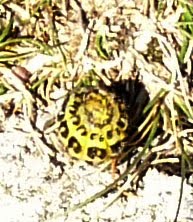
Ragged Robin on Skye

My 'Haiku: Skye summer' has been Highly Commended in the 2015 With Words Summer Haiku Competition. It will appear in the competition anthology, The With Words Haiku Book of Summer.  

Alan Summers of With Words is also planning to publish The With Words Book of Summer.

Tuesday, 19 March 2013

Poetic People: Kathleen Jamie in Conversation with Lavinia Greenlaw at UEA

Lavinia Greenlaw introduces Kathleen Jamie ...

... at UEA (the University of East Anglia, Norwich, UK).

David and I attended a riveting poetry reading at UEA last night as part of the UEA Literary Festival. Kathleen Jamie, winner of the 2012 Costa Poetry Award, read a number of poems, many set in Scotland and the islands, from her new sparkling poetry collection, The Overhaul. We rapidly found ourselves in a world of Bottlenose Dolphins, Basking Sharks and Red Deer stags.

Kathleen, who said she was usually drawn to birds and animals on account of the fact that these creatures catch our eye when they move, also included three memorable flower poems. Kathleen was described by Lavinia Greenlaw as 'attentive' (to the natural world) but never 'attention-seeking', an attribute shared perhaps by the small blue bell-shaped flower in one of the poems. 

There was a fascinating conversation on the subject of engagement with the natural world, and how perhaps the poet sees her own approach as a thing apart from the more traditional Romantic notions of the all-seeing viewer-writer. Kathleen spoke wistfully of what might have been an awakening or flowering of a new phase in writing about the natural world. She gave the impression that in her view it was a wave that began to roll but perhaps failed to gather sufficient momentum. Perhaps it has yet to reach its zenith. I, for one, hope that this is the case, for it seems to me that there is an increase in 'wild' writing that balances 'engagement' with 'inhabitation', allowing the world (in Kathleen's words) 'space to be its own thing'.

Kathleen concluded that we engage with the natural world, 'because we have to; they (i.e. the creatures and component parts of our eco-systems) need us to, to keep the channels open.'

Book-signing afterwards ... a copy of 'Sightlines'

Wednesday, 25 August 2010

Magazine Moment (16): Cultural Horizon Magazine (Romania)


You can enjoy the vibrant 'buzz'

of Van Gogh's famous Sunflowers
here

I was delighted to receive the current copy of Contemporan Orizont Literar (Annul III - Nr.4 (18) / JULY-AUGUST 2010) through the post from Bucharest. Mihai Cantuniari is Director of this international and largely multi-lingual publishing enterprise, with Daniel Dragomirescu as Editor-in-Chief. The magazine's new Foundation is a media partner of MTTLC, which comes under the guidance of Professor Lidia Vianu at the University of Bucharest.

GOOD NEWS! ... Members of the magazine's editorial and production team have secured a national headquarters in Bucharest. The new Foundation is now on track. Daniel and his colleagues have persevered to ensure that the magazine goes from strength to strength, rising to new heights and inspiring readers (and writers) from all corners of the globe. I am not alone in acknowledging a debt to the editor's cultural foresight.

A package from Romania!

The arresting and penetrating eyes of Van Gogh, in his self portrait 'without beard', adorn the front cover of this issue. I cannot help feeling that the portrait complements the poem on p.16, After Kirchway after Keats by Professor Donald Riggs of Drexel University, Philadelphia, USA. I have no idea whether the painter's depressive and suicidal traits were manifested in a previous generation, but I find myself substituting 'brother' for 'sister'* in Van Gogh's case. The poem poses - as perhaps all good poems should - more questions than it attempts to answer, concerning our genetic and social make-up as individuals. I found myself reconsidering the old chestnut of whether art arises in its most potent form out of suffering - or whether suffering is just one of many valid catalysts for creativity.

This fine poem by Riggs is, of course, not about Van Gogh but about Keats. A picture of the poet lodged itself in my head back in 1985, when I lived in Rome, and paid my first visit to the Protestant Cemetery by Piramide (named after the eye-catching Pyramid of Cestius), to see those paradoxically ethereal and immortal words of epitaph etched in stone. Since then my vision has mutated somewhat, and it would be fair to say that the Keats of Bright Star is probably the dominating picture today - such is the power of story, reconstruction and (perhaps especially) the moving image.

Curiously, this issue has more of Keats on p.50. Swansea poet, Byron Beynon, evokes the interior of the Keats-Shelley House at 26 Piazza di Spagna, in his poem, The Spanish Steps, Rome. The poem includes the chilling line, 'death entered at eleven o'clock'.

Speaking of Wales, you will find my interview with Cardiff eco-poet, Susan Richardson (and here), on p.4 - along with Susan's polar poem, Waiting at the Breathing Hole, about life above and below the ice, in which the speaker waits expectantly for 'the whiskered nose of inspiration'. The poem is from Susan's acclaimed poetry collection, Creatures of the Intertidal Zone, published by Cinnamon Press. Thank you, Susan, for your detailed answers to my snow-shower of questions! Incidentally, you can read about Susan's recent visit to Keats' House in Hampstead, UK here.

This edition contains 60 packed, illustrated and well presented pages of:
  • Articles and Features (e.g Deborah Ann Erdmann, USA on There's No Place Like Home)
  • Poetry (p.8-11, 16-18, 21-22, 25-26, 30-31, 34-36, 43-48, 50-55, 59)
  • Contemporary Perspectives and Horizons (e.g. Peggy Landsman, USA; Iorgu Gălăţeanu, Romania; Maria Eugenia Mendoza Arrubarrena, Mexico)
  • Photographs and Illustrations (throughout)
Thank you once again, Daniel, for the opportunities that have arisen - opportunities to make new friends, to gain fresh perspectives on the multi-faceted world of the Arts, and to learn more about Romania itself.

This edition is truly 'international' in outlook. The following countries are represented by those who have contributed:
  • Romania
  • USA
  • Germany
  • Chile
  • India
  • Bulgaria
  • Nigeria
  • Spain
  • Mexico
... and Wales, including a page of Lyrical Horizon | Orizonturi Lirice poems by Chris Kinsey. I interviewed Chris, BBC Wildlife Poet of the Year 2008, in an earlier edition in my occasional column, Dialoguri Galeze.

Do take a look at the magazine site here. New subscribers are always welcome.
  • MAGAZINE PRICE: 12 EUROS | 15 DOLLARS PER COPY (SHIPPING INCLUDED). PayPal details to the right of the magazine page if you click here.
* A letter from Keats to his sister, Fanny


Thursday, 27 May 2010

Creature Feature (16): Wildlife at Mwnt, Gwbert and Cardigan Island

Mwnt from the Cardigan Farm Park
You can just make out the white bell tower of the Church of the Holy Cross,
halfway up on the right.


We enjoyed a visit to Mwnt on the Cardigan coast of Wales last weekend.
The weather was glorious and we saw some interesting wildlife.
This was the first sign (below) we saw as we left the NT car-park at Mwnt...


This is the church in its glorious setting...


We were just enjoying our cliff-top picnic when we spotted our first seal...


After lunch we drove the short distance on to Gwbert,
to do the coastal walk around the Cardigan Island Coastal Farm Park.

We were thrilled to see this Common Lizard,
who had ventured indoors.
It was 'rehabilitated' seconds after this photo was taken.


Out on the cliffs we spotted a few Oystercatchers...


and this female Stonechat...


We spotted a Skylark ...


having watched Pipits earlier at Mwnt...


Suddenly we spotted this 'tortoiseshell' bird.
It was my first Turnstone:
an exciting moment!
The bird is sporting its breeding plumage.


By now, we could see Cardigan Island very clearly
from our gorse-lined cliff path...


I tried out my mini-tripod for the first time,
to see if I could get a steady shot of the bluebells on the island,
and of the nesting gulls.
I'm afraid I was only moderately successful,
but it gives an idea of the beautiful blue swathes.


We spent ages with these gulls, waiting for more seals to surface,
but the tide was high
and there were a lot of motor boats about, making quite a racket,
despite the speed limit in these conservation waters.


The Herring Gull below was nesting on the rock between the mainland and the island.


I have often seen Burnet Moths on the cliffs at Mwnt.
We were too early this time, but I did spot the caterpillar below.
It unrolled itself and trundled off into the grass.
It was pretty fat!


There were scores of small blue butterflies from the Lycaenidae family,
but they were too fast for me to catch on film
and I did not like to disturb them.

However, this beautiful creature from the same family
was quite unperturbed
as I took its photograph
on the way back to the car...

Small Copper Butterfly

Postscript...

We kept our eyes on the water as much as we could in the hope that the Porpoises or Bottlenose Dolphins would appear. We did not spot any on this occasion, but I was pleased to read on the Whales in Wales blog that they were definitely around. I hope you were able to enjoy fine weather in your neck of the woods, and that you spotted some interesting flora and fauna, too.

Tuesday, 11 May 2010

Carnival Time (6): Tulip Fest


Tulip Time!
Tulip design from Coastcard


Tulips at Aberglasney
2010
(immediately above and the two photos below)
More on Aberglasney


Thanks to Rosie at Leaves'n'Bloom, I discovered that Shirl at Shirl's GardenWatch is hosting a TulipFest.

Why not take a tulip photo and join in, by posting it with a link to Shirl's site?


Tulips in the National Botanic Garden of Wales
(2009)

A sea of tulips in the National Botanic Garden of Wales
(2009)


Tulips by A.E. Stallings... I wonder if tulips make you feel this way, too. I have just written a Ghazal about tulips in Emirgan Park, Istanbul.

Friday, 26 March 2010

Conservation Corner (4): Triffids? - Swansea's Japanese Knotweed Problem

The tricky issue of how to treat the swathes of Japanese Knotweed in Swansea has received coverage in the press. It is very hard to know the responsible way forward on this issue.

You might care to read the following blog posts, with links to the newspaper coverage:

Friday, 14 August 2009

Conservation Corner (1): Wild Flower Garden


My River of Wild Flowers

Back on 1 January 2009 I blogged about my New Year Resolution to have my own small river of wild flowers in my garden. My 'river' is more like a tiny trickle; but due to the cold weather, the rain and the slugs, my crop has not been as prolific as it might have been. Nonetheless the survivors have brought some lovely colours to my garden and have provided food for insect life. I would hope to plant a similar crop again next year, but wonder how I can stop the slugs without resorting to unorganic means.

We now have a Wild Flower Centre on Gower: I shall have to go exploring...

Thursday, 9 July 2009

Travel (1): Scotland


Life at Coastcard has been quiet recently as I have been 'up north', enjoying the landscape, seascape, heritage and literature of southern Scotland and the north-east of England.

I spent a couple of nights in Durham, and visited three very different islands:
  • Bute (west coast of Scotland)
  • Inchmahome (on the Lake of Menteith, Scotland's only lake)
  • Lindisfarne, aka Holy Island (off Northumbria).
One of the highlights of the Scottish part of the holiday was seeing my first Osprey.

We were in a different part of Scotland, but you can read about the Loch Garten Ospreys here on the RSPB blog. You can read about plans for BirdFair 2009 here.

Friday, 12 June 2009

Curio Corner (1): Plate Friday (well, almost)

Bone china trinket box from Tintern Abbey, Wales

When I read last night that Weaver was encouraging us to follow in the footsteps of Elizabeth (and her blog, About New York) by marking today as Plate Friday, I thought I should have a go at posting something. I don't collect plates, but I hope this small item of bone china will serve as an acceptable substitute.

I went through a phase as a young teenager of collecting cheap china - well, largely china - milk or cream jugs from bric-a-brac stalls, church bazaars etc. I think my interest was aroused initially by a small china urn full of honey. We were studying ancient Mediterranean cultures at school, and the shape of the urn (a miniature honeypot, I suppose) reminded me of the amphorae and pithoi from ancient Greece and of the exquisite bee earring made of gold from Minoan Crete.

The sad truth is that I no longer collect jugs (or stamps or coins), although I can never resist an interesting postcard. These days, I tend to be lured in to secondhand bookshops, but just occasionally an item other than a book will catch my eye. The little trinket box above was one such item.

I bought it at Tintern Abbey, and as you can just about see, it sits on our mantelpiece above the fireplace at home. Tintern is a couple of hours away, but it makes an excellent destination for a day out, particularly in the spring when the banks of the Wye are awash with snowdrops. Thoughts of Wordsworth are never far from my mind, and I have to think quite hard to imagine what the area must have been like BEFORE the poet penned his famous Lines Composed a Few Miles above Tintern Abbey, on Revisiting the Banks of the Wye during a Tour. July 13, 1798.

'Wreaths of smoke' occasionally waft up from cottage chimneys to this day, but I doubt they emanate from the cave of a hermit, deep in the woods. With the advent of photography and the popularity of the snapshot, we began to think in terms of a moment or split-second captured in time or caught on film. These days we are becoming more accustomed to taking moving images. I find it fascinating that Wordsworth's heart did not stop beating (as in a snapshot moment), but that he recorded 'sensations sweet, / Felt in the blood, and felt along the heart'. Life pulsed through his poetic veins in tune with the rushing waters of the Wye. Wordsworth wrote his poem in blank verse, and it is (in my opinion) the iambic pentameters that imbue the piece with vitality - and become the vessels for the poet's wide-ranging thoughts and moods. Memory plays a key part in this piece and should never be underestimated.

Incidentally, I believe that the acorn in the photo is from the species, Turkey oak or Quercus cerris.

Plate Friday posts: Elizabeth at About New York is hosting this mini-carnival. You can find all the links at her blog. Do take a look. I wonder how many corners of the globe are represented.

Tuesday, 9 June 2009

Seasonal Spotlight on Aberglasney (1): June 2009


June at Aberglasney, the garden lost in time
and home of the poet, John Dyer,
Carmarthenshire, Wales, UK

'Hear the thrush, while all is still,
Within the groves of Grongar Hill'
John Dyer (d.1757)

I hope to post occasional seasonal photographs of these views of the garden:
  • The House at Aberglasney (partly open to the public, often with exhibitions)
  • The view from Aberglasney to Grongar Hill (the view from my favourite seat)
  • The Upper Walled Garden (with Celtic design flowerbeds)
  • The stream in Pigeon House Wood
  • The Cloister Garden
  • The stream in Bishop Rudd's Walk
Invertebrate Life
  • Insect life on the edge of the pond in The Pool Garden (we have seen newts and an eel here: my photo of an eel at Aberglasney is here)
Bird life:
Garden Plants
  • Poppy
  • Old fashioned rose (ah, the scent!)
  • Iris
Wild flowers
  • Orange Hawksbit (aka Fox and Cubs)
  • Ox-eye Daisy
  • Ragged Robin
  • Buttercup
... and finally...
And finally, for Aberglasney's literary links (Wordsworth, Gillian Clarke...), you may like to click here. I hope you have enjoyed your virtual visit to the garden.