Showing posts with label Robert Macfarlane. Show all posts

Thursday, 6 October 2022

National Poetry Day 2022 on Aldeburgh Beach


David and I have just returned from a wonderfully sunny day on the beach at Aldeburgh, where we joined other members of Suffolk Poetry Society (SPS) for the traditional National Poetry Day reading at the South Lookout, thanks to our Patron and host, Caroline Wiseman, and to members of the SPS committee who had organised the event.


We took the #NationalPoetryDay theme of the environment, which gave rise to a variety of largely serious poems on subjects as diverse as the ocean (and the devastation caused by plastic, oil slicks and pollution), a field where there had once been hedges with birds, and a beach with fossils. While acknowledging the gravitas of the Climate Crisis, we appreciated the occasional moments of wry humour which added to the sense of light and shade.

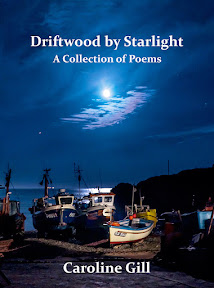
I read 'Puffin's Assembly'* from my poetry collection, Driftwood by Starlight, published last year by The Seventh Quarry Press (and available here for £6.99/$10).


The chip shop was still open at the end of the readings, and proved more than some of us could resist! 


* * *

*'Puffin's Assembly' was first published in Orbis. It was inspired by Robert Macfarlane's nature-word campaign, which resulted in The Lost Words.


Friday, 28 May 2021

'On a Knife Edge', a new anthology from Suffolk Poetry Society


This book has just been published by Suffolk Poetry Society as a response to the diminishing state of nature. It forms part of a collaboration between the Society and The Lettering Arts Trust (Snape), where an exhibition of the same name opens in July. I am delighted to have two poems and a micro-poem about IUCN red-listed species included. 

The topic resonates closely with Robert Macfarlane's work (supported by Jackie Morris and her artwork) in response to an increasing concern over the fact that 'nature words' (the 'lost words': see here) were being removed from the 2007 edition of the Oxford Junior Dictionary. Apparently space was needed for words deemed more valuable in a digital and technical age. You can read my post here about a previous exhibition at The Lettering Arts Trust on this subject. 

On a Knife Edge was primarily created by Derek Adams, Lynne Nesbit, Beth Soule and Colin Whyles. It can be purchased here.  

Thursday, 6 June 2019

The Lost Words - Forget-Me-Not Exhibition


We spent a wet afternoon enjoying this fascinating exhibition, installed in the gallery at the Lettering Arts Centre Trust, part of the Snape Maltings complex. Robert Macfarlane's book, The Lost Words, illustrated with superb art by Jackie Morris, has taken the nation by storm, finding its way into schools, libraries, concert halls, festivals, homes and hearts across the land.

Most will know by now that the book was prompted by the sad fact that a significant number of key nature words - acorn, bluebell, conker, to name but three - were replaced (or superseded) by ones deemed more valuable in the current age, like words to do with technology, in the last edition of The Oxford Junior Dictionary.

This situation has prompted many responses involving music and the other arts. Those who were engaging with aspects of the book for this particular exhibition had used stone-carving techniques to present a number of the lost nature words, such as 'otter', 'fern' and 'newt', in fresh and meaningful ways.

How, I wondered, would these letter-cutter artists prepare a significant piece when each had just one word to interpret in, on or through the medium of stone? I find artistic process fascinating, and I particularly enjoy the creative sparks that fly when one artistic form confronts another in an ekphrastic way.

I know little about stone carving, though I have been interested in the properties of stone for many years. As a child I had a stone polishing machine (in days before we knew it was best to leave stones on the beach). We made jewellery from polished stones at my church youth group for a while when I was a young teenager. Holidays in Cornwall introduced me to serpentine and soapstone - and to sea urchin spines in the sand which I mistook for strontianite!

So I approached the exhibition with curiosity, and was richly rewarded. The exhibition was curated by Lynne Alexander and the exquisite and informative exhibition catalogue, The Lost Words - forget-me not, was edited by Suzy Powling and Lynne Alexander. Not surprisingly the book opens with Forewords from Jackie Morris and Robert Macfarlane. There is a third Foreword, from Matt Gaw, of Suffolk Wildlife Trust (whose Nature Summit I am about to attend have now attended).

Each of the exhibits has a spacious entry in the catalogue, with an image of the stone artwork of the  Lost Word on each recto side, and prose about the piece opposite, with name, definition, origin and text. Each Lost Word now tells a story in stone: Fiona Flack, who created the artwork for FERN tells how a fossilised fern was her inspiration. Annet Stirling's NEWT caught our eye because she has demonstrated the creature's amphibious 'under water - over water' lifestyle and its precarious existence (presumably as a word and as a creature) by splitting the word horizontally through the middle. Iain Cotton's arresting rendering of OTTER caught my attention because the otters and stone base blend so perfectly. I was not surprised therefore to find that this word was carved on a slate beach pebble from Islay, where otters can sometimes be seen. The pairing of pebble and Lost Word in this instance seemed to be in particular(ly poignant) harmony. I'll end by mentioning Jo Sweeting and a part of her inspiration for her lithe rendering of LARK:


'larks building spires above spires into the sky'

The South Country  
by Edward Thomas


  • My previous posts about the nature words are here and here.


Wednesday, 8 May 2019

Of Poems and Puffins


Puffins have been in the media recently, featuring in Adam Nicolson's BBC4 series, The Last Seabird Summer? There has also been some delightful footage on Wales, Land of the Wild (also BBC) of Puffins breeding on Skomer, a small island off the Pembrokeshire coast.

I had a Puffin poem published recently in #186 of Orbis (and was delighted to find it had received an Honourable mention in editor Carole Baldock's Readers' Awards). My poem, with an epigraph from The Birds by Aristophanes, a comedy about the original Cloudcuckooland, was prompted by a session I attended at the Norfolk Festival of Nature back in 2015, at which Mark Cocker and Margaret Atwood shared with the audience their concern over the nature words that had been dropped from the Oxford Junior Dictionary. My poem does not follow these words, or indeed the ones that feature in The Lost Words by Robert Macfarlane, but I wanted to explore the plight of our threatened sea-birds.

Those who live within reach of Snape Maltings in Suffolk may be interested to know that there is an exhibition, 'The Lost Words - Forget me not', at The Lettering Arts Centre until 26th May.

And, speaking of Suffolk, do buy a ticket and come and enjoy the 6th Festival of Suffolk Poetry in Stowmarket on Saturday 11th May.