Showing posts with label Wonderful Words. Show all posts

Friday, 5 November 2010

Seasonal Splash (4): Bonfire Wordle

A corner of our Bonfire Night WORDLE
I have made a 5th November Wordle, thanks to word contributions from fellow writers on the Writelink site. I have posted a corner above, but thought you might prefer to see the whole thing here ...

You can find out more about this strange date in our UK calendar if you follow this link. 

Animals and fireworks do not go together. Please follow the safety code suggested by organisations like the RSPCA.

Thursday, 18 February 2010

Wonderful Words (10): Withywindles and other Watery Words


In Xanadu did Kubla Khan a stately pleasure-dome decree:
where Alph, the sacred river, ran through caverns measureless to man.

Samuel Taylor Coleridge


Above: The Peat Moors Centre near Shapwick Heath, Somerset Levels
The Centre has now been closed down.

Below: The Somerset Levels


The Weaver of Grass is hosting a meme today on dialect words for a small river. Like others from different corners of the globe, I have left a few 'stream' words in her comments box. You may be wondering about the 'withywindles' in my title. 'Withywindle' is a word used by Tolkien for an old winding river.* The verb 'to windle' means to meander. 'Withywind' was a name for bindweed: you can begin to see the connection.

I have been thinking around the subject of dialect, and the origin of the many Welsh and Cornish place names I tend to take for granted. I have lived in Wales now for nearly two decades. I grew up in rural Norfolk, where we had some marvellous local expressions. I have spent a lot of time in Cornwall, home of my great grandmother and great aunts, where wonderful words abound. All these are watery places. I also have ancestors who hailed from Somerset, with its marshy Levels.

WALES: I will begin close to home!

South Wales has, in effect, three broad dialect-specific areas in terms of vocabulary and phonology.
The dialects in question can be referred to as Demetian (Dyfed/Pembrokeshire), Central Southern (Ceredigion and Ystrad Twyi), and Gwentian (Gwent and Morgannwg). There are many local specialities within these broad groupings. In Mumbles, for instance, (with its Upalong, Outalong and Inalong residents), we find the words 'PILL' (as in Blackpill, on the way to Mumbles from Swansea) and 'LAKE' for 'stream'. Incidentally, I have often walked to Frenchman's Pill on the Helford River in Cornwall, thinking that 'Pill' meant 'Pool', but those who read Daphne Du Maurier's novels will not be surprised to find that it can also mean 'CREEK'. I have mentioned a number of other Welsh 'stream' words in Weaver's Comments Box.

CORNWALL: since I seem to be moving in that direction!

Perhaps my favourite word here is 'ZIGHYR' or 'SIGGER' or sometimes 'SIGIJR'. The word means 'lazy', and can be used 'when a very small slow stream of water issues through a cranny underground'. (See here, and scroll down to 'Z').

NORFOLK: and the Broads (see here)

It is worth remembering that Charles Dickens had some knowledge of the Norfolk accent, since he put it to good use in the speech of the Yarmouth fishermen, Ham and Daniel Peggoty in 'David Copperfield'. I love the word, 'GRIP' (or occasionally 'GRIPPLE' or 'GRUP') for a small drain, stream, or 'BECK' (such as Suffield Beck). A 'LODE' or a 'LOOD' tends to be a constructed watercourse. To draw a 'DYKE' (like Catfield Dyke) or a 'DIKE' (like Tunstall Dike) means to clear out a ditch. Norfolk 'DYKES' are normally watercourses, though occasionally they are the high banks on either side - more in keeping with e.g. Offa's Dyke. A 'FLEET' (as in Rockland Fleet) is a channel - or occasionally more of a drain - leading from the river to a Norfolk Broad. Those majestic Norfolk Wherries would have sailed up Rockland Fleet in days gone by, bound for the staithe where I used to paddle about with oars. I have happy memories of watching the 'Albion', one of the last of these fine sailing craft. In Broadland, you also get 'SOUNDS' (e.g. Heigham Sound, sandwiched between Candle Dyke and Meadow Dyke). These are channels or stretches of water - I wouldn't class them as streams - that link the different sections of the waterways. Then there are the water 'RUNS' (e.g. Blocka Run at St Olaves) and the 'CREEKS' (e.g. Boathouse Creek near Dersingham).

SOMERSET: the Levels

I have not spent very much time on the Somerset Levels; but when the opportunity arises, I always find myself greatly enjoying this strange landscape with its peat and sedge. The word that immediately comes to mind, 'RHYNE' (e.g. Eighteen Feet Rhyne) or 'RHINE', is a drainage ditch or canal. Its purpose was to turn areas of low-lying wetland into pasture. I particularly like the area around Shapwick Heath.

* * *

So that just about completes my mini-tour of stream words. On another occasion I might have re-visited other parts of Britain that I know well. If you feel that Cornwall has not been paid much attention, well, perhaps it is because I have saved one of my favourite items until the end of this post. I wonder if you know the wonderful dialect poem, 'The Quest for the Gwidgy-gwee' by Joseph Thomas (1840-1894). You can read it here on the Old Cornwall site; and encounter perhaps for the first time, the lizamamoo and the padgypaow. You may find this Cornish dialect glossary of help. Enjoy...

... and be sure to visit Weaver's blog for a 'wordle'* of watery words. There is now a particularly good list of Welsh one on her blog here.


* My thanks to Peter Gulliver, Jeremy Marshall and Edmund Weiner for this information in their splendid book, 'The Ring of Words: Tolkien and the Oxford English Dictionary' (OUP 2006).

* Wordle

Monday, 18 January 2010

Wonderful Words (9): Metrophobia

Readers of this blog will know by now that unusual words intrigue me. I wonder if you have encountered the word, Metrophobia, before. I hope you do not suffer from it.

You can read more about it here on the Quill & Quire blog.

Lipogram, incidentally, was new to me, too.

Saturday, 22 August 2009

Wonderful Words (8ii): Pangram update

The quick brown fox jumps over the lazy dog...

Well, Michelle, here is my Pangram poem... I cannot claim that it is a 'pure' Pangram poem for many of the constituent sentences have more than 26 letters, and one or two - I fear - have the odd letter missing. It needs more polish, so please consider it as a 'work in progress'. It is, of course, essentially a kind of 'Found Poem'. Here goes:

Γαζίες καὶ μυρτιὲς δὲν θὰ βρῶ πιὰ στὸ χρυσαφὶ ξέφωτο*1
A quart jar of oil mixed with zinc oxide makes a very bright paint. *2

Brown jars prevented the mixture from freezing too quickly.
An inspired calligrapher created pages of beauty using stick ink, quill, brush, pick-axe, buzz saw, or even strawberry jam.
Six big juicy steaks sizzled in a pan as five workmen left the quarry.
While making deep excavations we found some quaint bronze jewellery:
Jackdaws loved my big Sphinx of black quartz.
A large fawn jumped quickly over white zinc boxes:
On the boardwalk grave playful lizards quickly jumped and exercised.
The exodus of jazzy pigeons was craved by squeamish walkers.
Travelling beneath the azure sky in our jolly ox-cart, we often hit bumps quite hard.
Five jumbo oxen grazed quietly with packs of dogs.
As we explored the gulf of Zanzibar, we quickly moved closer to the jutting rocks.
Whenever the black fox jumped, the squirrel gazed suspiciously.
The jay, pig, fox, zebra, and my wolves quacked,*
"Uphill jogging will tax pounding heart muscle very quickly - better to be lazy:
Now is the time for all quick brown dogs to jump over the lazy lynx."
Six busy ducks quacked wildly when the zookeeper jumped off the gravel path:
Many big jackdaws zipped quickly over the fox pen.

Jolly housewives made inexpensive meals using quick-frozen vegetables.
The jukebox music puzzled a gentle visitor from a quaint valley town.
Fred specialized in the job of making very quaint wax toys:
Jack quietly moved up front and seized the big ball of wax.
The public was amazed to view the quickness and dexterity of the juggler.
Two hardy boxing kangaroos jetted in from Sydney to Zanzibar on quicksilver pinions.
Back in my quaint garden jaunty zinnias vied with flaunting phlox.

***

*1 Title: No more shall I see acacias or myrtles in the golden clearing (using the Greek alphabet).
*2 A quart jar of oil mixed with zinc oxide makes a very bright paint. (Epigram. For the significance of the 'jar of oil' see Aristophanes in The Frogs on Euripides - e.g. note against 'p.99' on linked page).
*3 Letters left in red in this line are extra to the alphabet requirement. (I charted this line as an example...).

Do feel free to analyze any further sentences, and let me know which letters are missing (or surplus to requirement!). One further point: I added a few extra letters on occasions to change the tense in pre-existing pangrams from present to past.

Wonderful Words (8i): Pangram in Progress


Pangram in the making...

I am attempting Michelle's Poefusion Pangram Challenge - a lot of fun, but perhaps not exactly the thing for those little grey cells on this distinctly grey fuzzy morning!

Why not jump on the bandwagon (or the 'panwagon') and come and join us...

I will let you know when and if I have my Eureka! moment of 'success'.

Monday, 17 August 2009

Beautiful Birds (13): Magpies - two for joy, twenty for...?


One for sorrow, two for joy...
Nineteen for ???

We were just enjoying a cup of coffee when we realized that there was a racket going on around us. It was a tiding, a gulp, a charm or perhaps a murder of magpies - depending, of course, on your point of view. Collective nouns can be such fun!

We often see magpies around our area; and although they make enough noise for ten, there are usually only three or four to be seen. Why, I wonder, were we suddenly surrounded by so many? Was it just one of those things - or can we blame the weather?

I began to wonder about the origin of the word, 'magpie', and whether the 'pie' bit was related to the word 'pied' (see also: piebald).

'Pied Beauty' by Gerard Manley Hopkins has long been a favourite poem of mine... not forgetting, of course, 'The Pied Piper'.

It seems, however, that the 'pie' bit actually comes from the Latin name, pica pica, which means 'a craving for something not normally regarded as of nutritional value', or in the specific case of the magpie, a bird who gleans all sorts of odd bits and pieces for its nest.

Has anyone else experienced a murder of magpies this evening? Do let me know.

Wednesday, 24 June 2009

Wonderful Words (7): Ouroboros

I came across the word 'ouroboros' ( or in Greek, Ουροβόρος) on Nic Sebastian's Very Like a Whale blog - see Question 5 - and was immediately intrigued, particularly when I discovered that it was linked to a poetry form.

Thank you, Nicolette Bethel, editor of tongues of the ocean for the introduction to the ourobotic poem by , editor of The Caribbean Review of Books.

Those who know me will know that I am always on the look out for new forms in poetry. I have enjoyed writing about the following ones (with the help of their respective creators):
  • The 'Fib' form - after Fibonacci - created by Gregory K. Pincus of Gottabook.
If you would like to read about these in Wendy Webb's eTIPS magazine, I suggest you leave a comment here or visit Wendy's blog. My third piece on (short) forms in this occasional series is due to appear later this year.

Incidentally, the latest edition of Wendy's TIPS for Writers (72) is out, and as usual, contains a feast of poems, competitions and news. Many congratulations to Tina Negus on winning the Margaret Munro Gibson Prize. This TIPS competition was judged by Alison Chisholm.

My thanks to Mand for the link to The Ouroboros Review. (See Mand's comment below).

Tuesday, 16 June 2009

Wonderful Words (6): Photoetry

I always enjoy keeping up with the Poetry Book Society recommendations, and I was particularly interested to read the word 'photoetry' in the latest edition (PBS Bulletin, Summer 09).

Paul Muldoon's book, Plan B, is described as 'photoetry' on account of the fact that the poems are complemented (and perhaps enhanced?) by the images of Scottish photographer, Norman McBeath. The PBS reviewer points out that, in this instance, the cover image alone serves as an illustration in the conventional sense of the word. The photographs sit alongside (or run parallel to) the poems and create an environment in which 'poems and images are in conversation'.

I enjoy ekphrastic poetry of all kinds, despite the fact that poems about artworks abound in profusion. By the sound of it, Plan B does not quite fall into the usual category. To date, I have only read about it. There are times - many times - of course, when a poem speaks entirely for itself, and any images it conjures up remain in the eye of the writer and of the reader. That can be very special. There are other times when external images play a key role, times when an electrifying symbiotic relationship develops on the page between text and image.

I have particularly enjoyed two recent collections of photoetry (as I can now refer to them!):
  • Recollections (Flambard Press) by Maureen Almond. This volume of poetry developed out of Maureen's time as poet-in-residence at the Museum of Antiquities (now part of the Great North Museum), Newcastle upon Tyne. Her poems were partnered by the photographs of the museum's Audio-Visual Officer, Glyn Goodrick. The collection as a whole celebrates the work and collections of the museum and explores (in my opinion very successfully) the interaction between the Romans and the modern museum visitor.
  • Batu-Angas (Seren, ISBN: 9781854114648) by Anne Cluysenaar is subtitled 'Envisioning Nature with Alfred Russel Wallace'. The poetry constitutes an exploration of the life of Wallace, whose independent discovery of natural selection in 1858 led to Darwin's publication of The Origin of Species. The enhancing illustrations and photographs represent some of the specimens collected by Wallace during his journeys. Cluysenaar runs the Henry Vaughan Society and edits their magazine Scintilla. She lives in Vaughan's hometown of Usk in Wales.
What photoetry editions have you encountered - and enjoyed? Do let me know.

I cannot, I cannot, I think, quite count this next volume as photoetry, but it definitely deserves a mention in this post:
  • The Terracotta Army by Gary Geddes (Peterloo 2007). This book is beautifully produced. Each poem appears opposite a page containing a calligraphic Chinese character by Shuai Lizhi. I imagine (at least I am guessing) that each character represents the title of the facing poem. Each poem (in English) bears the title of one of the warriors: you will encounter the spy, the harness-maker, the military historian and the chaplain - to name but four.
Since we are speaking of definitions, how does photoetry differ from an anthology with illustrations in the traditional sense (think children's books, perhaps)? I believe that there is a distinction based around those words 'in conversation', but it is not easy to define with precision.

Tuesday, 14 April 2009

Language & Linguistics (3): Translation

The book in Rudston Church
(please advise if this is not the right way up)

Most writers, I imagine, must wonder at one time or another about translation. My poems have occasionally appeared in international anthologies (e.g. from India and the USA); but to my knowledge, none of my poems has been translated into another language. Who knows what the future will hold. Works like Homer and Shakespeare, of course, have appeared in countless tongues. I came across a useful site concerned with translation, and I also found it interesting to read about the eighteenth century views of Samuel Johnson (click link and read 'A thought for the day').

You may wonder what sparked this train of thought. I was recently at Rudston Church near Bridlington, visiting the grave of the novelist, Winifred Holtby (and also looking at a gigantic menhir in the churchyard and reading the memorial tablets to my distant MacDonald ancestors). As we entered the church, my eyes alighted on a delightful copy of South Riding ... translated into Japanese by Suzoku Sakamoto.

Wednesday, 11 March 2009

Wonderful Words (2): Save the Words


'I wandered lonely as a cloud'
Wordsworth
(words worth saving)

I have just 'adopted' this word through the Save the Words site. Will you rescue a word, too? If so, why not visit the Language: unpacked site to share it.

Thursday, 5 March 2009

Wonderful Words (1): Save the Words

A colleague of my husband's has just sent a link to this extraordinary site. You can learn new words and help to 'adopt' old ones. A real Aladdin's Cave (unless you are of the belief that words live for a season and then die, in which case you may like to read this entry on Ronnie Knox).

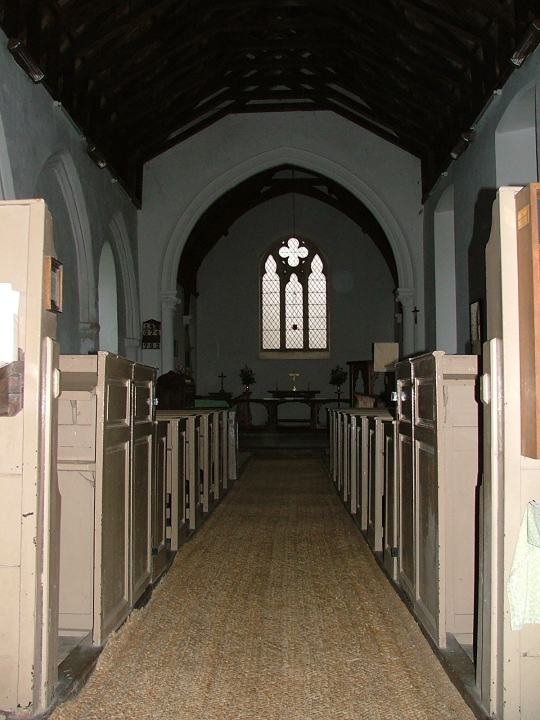
A parcel of secondhand books arrived at my door wrapped up in pages from The Guardian, 9 February 2009. I unravelled the newspaper and was particularly interested in the Country Diary feature by Mark Cocker. It was about Claxton, a small village on the Yare in Norfolk, a few miles up-river from Bramerton, where I spent my teenage years. I can still smell the beautiful scent of the rush matting in St Andrew's Church in Claxton!

As readers of this blog will know, I was captivated by Cocker's Crow Country, which you can buy via my Amazon widget to the right of this page. In the Guardian column, Cocker ponders the origin of the name, godwit, and offers the evocative local alternate, yarwhelp.