Showing posts sorted by relevance for query homer. Sort by date Show all posts

Tuesday, 31 August 2021

DRIFTWOOD BY STARLIGHT: Questions from Maria Lloyd (3)

Reconstruction (Piet de Jong) of floor motifs, Throne Room, Nestor's Palace, Pylos
 

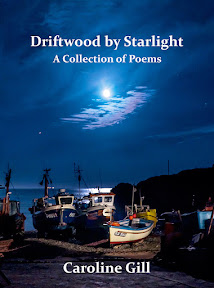
Driftwood by Starlight, my first full poetry collection, was launched online on Tuesday 3 August. The book was published in June 2021 by Peter Thabit Jones of The Seventh Quarry Press. It can be purchased for £6.99/$10 from the publisher's online shop here.  


Maria Lloyd, who holds a Masters degree on The City of Rome from the University of Reading, read the collection and decided to set me some questions. I am attempting to provide a few answers in this mini-series (without giving too much away ...). Thank you, Maria. 

Post One (click here) concerned my poem 'Monte Testaccio, Mound of Potsherds' on p.35 of Driftwood by Starlight.

Post Two (click here) has as its focus the poem, 'Wildfire', on p.31. 

This is Post Three, and we stay with an archaeological theme as we switch our focus from the Roman World to Ancient Greece.

Let's turn to Maria's question. It relates, of course, to all the poems in the collection; but for the purposes of this post I shall apply it to 'The Ocean's Tears' on p.24 and 'Ice-Blue Blood' on p.25:

'You appear to write on a wide range of topics but what were the triggers that made you want to write about these topics in particular?' 

Many of us have a sense of adventure lurking somewhere inside us, even if in some cases we turn out to be largely armchair travellers. The classical world has fascinated me for decades so it is not surprising that aspects of ancient Greece and Rome surface in my poems from time to time. The Odyssey is a favourite ancient text. 


Homer in hand at Nestor's Palace, 'sandy Pylos', Peloponnese, 2010. Photo: © David Gill

The two poems I mention above were the result of my engagement with 'Homer', the blind bard. How much of the Iliad and Odyssey can actually be attributed to him is debatable since the tales of Troy are part of the oral tradition in which songs were passed on from singer to singer.  


Bust of Homer, Mount Egcumbe

The bust above, photographed in June 2021 during our Cornish holiday, is similar (though not, in fact, identical) to a sculpture of Homer found near Baiae on the Bay of Naples and purchased by Townley (BM Cat. Sculpture 25).

The two poems I consider in this post exhibit similarities and differences. They are not 'a pair', though it was a deliberate choice to place them opposite one another in the collection. Both concern the tale of Troy to some degree. They each have (in my mind at least) a 20th century UK beach setting.

'The Oceans Tears' is a Tercet Ghazal, a form developed by Robert Bly from the traditional (Arabic) Ghazal of Persian origin. I first encountered Ghazals with a three-lined stanza or 'sher' on The Ghazal Page, a web resource run by Gene Doty, which, sadly, is no longer available. 

'Ice-Blue Blood' is also written in three-line stanzas, but (to give words from this poem a new context) there the similarity ends, at least as far as form is concerned.

'The Ocean's Tears' includes a number of items that point to the Homeric world (gold, bronze, arrows and horse). Troy was never far from my thoughts during the drafting of this poem. 


Entrance to the 'Troy: Myth and Reality' exhibition, British Museum, 2019-2000
 

Those who have visited King Agamemnon's citadel at Mycenae will be familiar with the cyclopean walls to which I allude in the third verse.


Mycenae, linked to King Agamemnon. Photo: © David Gill

The Lion Gate entrance to the citadel at Mycenae. Photo: © David Gill

Mycenaean walls, with jeep for scale. Photo: © David Gill

'Ice-Blue Blood', on the other hand, begins with an epigraph from William Cowper's translation of Homer about a many-legged creature. I have long been intrigued by artistic renderings of octopus and squid in the Ancient World (see assorted examples on Greek pottery below), and have wondered whether these representations have any symbolic meaning beyond the visual. I believe I read that in one part of the ancient Greek world, the octopus motif could have been applied as a kind of early trademark, but I would need to explore this further.


Octopus fragment found at Phylakopi, Melos (Fitzwilliam Museum)

Octopus (9), Metropolitan Museum of Art, NY (early 20th century reproduction of stirrup jar, Crete)

Octopus in the 'Troy' exhibition, British Museum

Amphora from Tholos tomb II at Routsi, Archaeological Museum of Chora, near Pylos

The octopus was a popular part of the so-called 'Marine Style' of pottery, which originated on Crete in the late Bronze Age and was embraced by potters on the mainland. Monsters, some more cephalopod-like than others, abound in Greek mythology. They are not all creatures of the sea. The Hydra, which appears in a number of myths and sources such as Hesiod, had several heads. Cerberus, or Kerberos, the hound referred to but not actually mentioned by name in the Iliad, had two, three, or even 'many' heads. 


The first open lecture I attended as an undergraduate at Newcastle University in 1979 was given by Dr John Pinsent of Liverpool University on the unusual theme of ancient art and cephalopods. He had authored a paper called The Iconography of Octopuses: a First Typology (BICS 25, 1978) about the development of octopus representations in late Mycenaean vase painting. 


More recently I came under the influence of a large blue graffiti octopus known locally as 'Digby'. Digby, designed by John D. Edwards, is part of the Never Ending Mural community arts project in Ipswich and a popular local icon (see here). There may well be a nod to the spirit of Digby in my poem. And, as I hinted earlier, the impact of squid and octopus representations on ancient artifacts should not be overlooked. There is something very fluid, fascinating and changeable about these marine animals. It is worth remembering that while the wine-dark purple colour from the Murex shell (see also here) was prized as a costly dye in Ancient Greece, humans have been writing and drawing with cuttlefish ink, known to us as 'sepia', since times of antiquity. 


Speaking of early writing, I began with a photograph relating to Nestor's Palace at Pylos in the western Peloponnese. It seems worthy of note that large quantities of Linear B tablets were found here. Ironically, these clay tablets were baked, and therefore preserved for posterity, in a devastating fire.

Linear B tablet (a cast, I think), Archaeological Museum of Chora

In his poem, 'Upon a Foreign Verse', George Seferis reminds his readers that Odysseus is a human hero, and as such a very different 'being' from the otherworldly monsters he encounters. Scylla in Odyssey Book XII has twelve feet and six particularly long necks, each ending in a head and three rows of teeth. She makes the Loch Ness monster seem extremely benign. Were Homer's sea monsters inspired by atmospheric shadows whipped up by storms at sea or by sightings of giant octopuses? I guess we shall never know.  

Thursday, 8 October 2015

Happy National Poetry Day!

I learned this morning that this is also World Octopus or Cephalopod Day, so here is an octopus from a reconstruction of Nestor's Palace in Homer's 'sandy Pylos' in the western Peloponnese. We visited this remarkable site five years ago. Over 1000 Linear B tablets came to light on this place alone.

And now for a little poetry. Alexander Pope may not be in vogue these days, but his rhymed version of The Odyssey gives a flavour of the storyline in the old epic (and it is a version that is out of copyright). What follows (in blue) are three excerpts from Pope, concerning the arrival of Odysseus' son, Telemachus, at Nestor's Palace. Telemachus is anxious for news of his father, who left his island home of Ithaka to fight in the Trojan War. Nestor is making animal sacrifices on the beach when his visitor arrives. 


Reconstruction of Nestor's Palace floor in the Chora Museum - octopus motif


Now on the coast of Pyle the vessel falls,

Before old Neleus’ venerable walls.

There, suppliant to the Monarch of the Flood,

At nine green theatres the Pylians stood.

Each held five hundred (a deputed train),

At each, nine oxen on the sand lay slain ...


Reconstruction of the Megaron floor in Nestor's Palace, Museum at Chora


Full for the port the Ithacensians stand,

And furl their sails, and issue on the land.

Telemachus already press’d the shore . . .


The Throne Room, with a huge central hearth


The youth of Pylos, some on pointed wood,

Transfix’d the fragments, some prepared the food:

In friendly throngs they gather to embrace
      
Their unknown guests, and at the banquet place.

Pisistratus was first to grasp their hands,

And spread soft hides upon the yellow sands;

Along the shore th’ illustrious pair he led,

Where Nestor sate with youthful Thrasymed.


from Alexander Pope's version of The Odyssey Book III. You can read the whole chapter here. 


Reconstruction of Nestor's Palace

Nestor's Palace - as it is now

  • If I was suggesting a good modern translation of The Odyssey, it would be the one by Richard Lattimore. 
  • You might be interested in Adam Nicolson's book, The Mighty Dead: Why Homer Matters, which I have just started to read.
  • And, of course, the poem, 'Ithaka' by Cavafy is one of my all time favourites. 
  • More octopuses! John Pinsent (1922-1995), a Classical scholar and Reader in Greek at Liverpool University, wrote a study called 'The Iconography of Octopuses: a First Typology' (BICS 25, 1978) about the development of octopus representations in late Mycenaean vase painting. I remember him giving a fascinating lecture on the subject in Newcastle when we were undergraduates. 

Friday, 5 September 2008

Blogspotting (2): Galumphing

Left: a lamp in the Cathedral Close at St Davids, Pembrokeshire, Wales, UK. The reflection makes me think of Narnia and Mr Tumnus.

Galumphing: the title alone is a curious one, and it comes from The Jabberwocky poem by Lewis Carroll. It is the 'other' Lewis (C.S. Lewis), however, who features most prominently in this blog, along with a few others such as Tolkien, Homer and Shakespeare!

The blog belongs to Jeremy W. Johnston, a teacher of English and Classical Studies (two of the three subjects I trained to teach as part of my Exeter PGCE back in the 1980s).

On the subject of Tolkien, you might like to take a look at the blog entry for 18 August, entitled The Annotated Hobbit. I was particularly drawn to the words of Horace on the subject of reading and re-reading. If I really like a book, I like to read and re-read it. Do you?

Johnston highlights an interesting point about the etymology of Bilbo's name. Tolkien, C.S. Lewis and Lewis Carroll were all masters when it came to making up names for their characters. How often do we attempt to create new words? In my craft class last week, I tried to think of a term I could use to describe my new technique of turning a photograph into an abstract greeting card design. I am not quite there yet ...

Johnston mentions Homer, and I was reminded of how much I fell in love with the tale of Odysseus as a result of a child's version of The Odyssey. Perhaps that was why I went on to read Classical Studies for my degree. You might be interested to read an article by about the universality of the Homeric themes in the Chronicle Herald.

Tuesday, 26 May 2009

Culture Corner (1): Great North Museum (b)


The Opening of the Great North Museum,
Newcastle upon Tyne, May 2009


(a) The Great North Museum: Hancock
(b) David outside the Great North Museum: Hatton
(c) and (d) Inside the GNM
(e) 1982: Outside the - old - Hatton Gallery:
Homer's bust in the Quadrangle, University of Newcastle, Rag Day 1982!
[We took it in turns to recite bits of Homer in Greek]


There was a great buzz in the air when we touched down in Newcastle Airport last Thursday to attend an opening evening at the Great North Museum. I had first arrived in the city by train as a university 'Fresher' in 1979: what a lot has changed since then. The city has always been vibrant, but it has definitely had a 21st century facelift. Additions like the Gateshead Millennium Bridge and The Sage have breathed new life into the area.

The Great North Museum brings together a number of Newcastle collections in a stately, state of the art museum. Gone are the days when museums were dusty and quaint cabinets of curiosity. The Great North Museum - a joint initiative between the City Council and the University - is a centre for education, enjoyment - and environmental concern. You can read, for example, about the Eye Project, in which young people have been playing a key role in recording the wildlife and landscape of the North East. The data has been fed into the Great North Museum: Hancock, so that the displays could reflect the current situation. There have been two databases: one for local recordings of wildlife sightings, and another, the North East Environmental Data Hub, for the recording of wildlife and habitat information by organisations and experts in the field. Both databases will help to inform the conservation needs of local species.

We were particularly interested to see how the collection of the old Hancock Museum fitted in alongside the university collections of The Shefton Museum (of Greek Antiquities), The Museum of Antiquities (from Hadrian's Wall) and the Hatton Gallery (of Art). It is an impressive start, but it is early days. I really hope that the respective - and sometimes overlapping - needs of 'town and gown' will be served successfully under this single starry flagship.
  • Recollections by Maureen Almond (Flambard Press). Do take a look at this link. Recollections is a very special book for it celebrates Roman items from the old Museum of Antiquities, which is now part of the Great North Museum. Photographer, Glyn Goodrick's glossy photographs are the perfect complement to Maureen's poems. The poems and photographs were commissioned by Lindsay Allason-Jones, Director of Archaeological Museums for Newcastle University. The poetry collection contains a variety of forms, including examples of sonnets and haiku. Favourite poems include Erase (with an epigraph from Horace's Satires) and Aemilia and the Ring. You can click the link to Maureen's site.

Wednesday, 3 February 2010

Creature Feature (13): Homer the Turtle flies into the UK

Cadgwith, Cornwall
where I once saw a large Leatherback Turtle on the beach.


You can read about Homer, the blind Loggerhead Turtle here, and about plans for rehabilitation his new home in Newquay, Cornwall.

Do look at the similar turtle features on Professor P. Brain's ecology blog, here, here and here.

Tuesday, 9 December 2008

The President reads Walcott

'... sinuous swans ...'
Derek Walcott, Omeros XXXVIII, III


I had the privilege of hearing St Lucian and Nobel poet Derek Walcott at the Guardian Hay Festival the summer before last; and was captivated by his outlook on the world, and particularly by his book, Omeros which I bought in The [excellent!] Poetry Bookshop in Hay.

Here in the UK rumours currently abound in the press regarding the identity of the Poet Laureate Designate. Poetry, it seems, is equally alive and well on the opposite side of the Atlantic. I am grateful to the Poets who Blog site for pointing me in the direction of an article on CityFile about US President Obama reading Walcott's Collected Poems - thereby presumably encouraging others in the support of poetry.

I have already mentioned my early love of the tales and travels of the Greek hero, Odysseus. Omeros as the name implies, is another epic poem about the web of human existence exemplified in sea travel and culture: indeed it is - in my humble opinion - a singularly fascinating 'take' on Homer's Odyssey. It is more than that: it is a new and unique work in its own right (though I use the word 'new' advisedly as the book was first published in 1990!). The poem makes use of the engaging Terza Rima form of chiming verse, a form used effectively by Dante.

Postscript
My copy from Hay came for good measure with a news cutting inside the cover: 'Hustling Homer' by Oliver Taplin, who was reviewing a production of 'The Odyssey' (Walcott style) at The Other Place in Stratford. The production was, apparently and appropriately, 'a cyclopean feat of poetry'!

Further information

Thursday, 8 March 2012

Media Matters (3) David Gill on Air

David at Nestor's Palace, close to Homer's 'sandy Pylos'

David was a 'sofa guest' on Radio Suffolk this afternoon. You can find the programme on this link - and by pushing the slide-bar along until you get to '2.30', about three quarters of the way along the line. We found it took some seconds before the sound kicked in.

The programme was billed with these words:

'on the sofa Professor David Gill who has been described as Indiana Jones in reverse because he likes to return antiquities to their original homes.'

The chat show covers various aspects of David's 'relationship' with archaeology, from his first find as a boy to his 2012 Award from the Archaeological Institute of America (which is when the Swansea media came up with the 'Indie' nickname). David mentions his poetry, and recites his poem, 'From Syracuse to Manhattan'.

Tuesday, 8 July 2008

The Muse in Museums i

Left: the scene of a Rag Day recitation of Homer's Iliad (in Greek), The Quadrangle, University of Newcastle upon Tyne, 1982.

I have long been interested in the relationship between art and literature (and between art and poetry, in particular). I enjoy novels, like The Girl with a Pearl Earring by Tracy Chevalier, which develop out of a painting. I love ekphrastic poetry, which draws its inspiration from works of art. I am currently reading Burning Bright, in which Chevalier's characters have a [fictional] encounter with the poet and artist, William Blake.

I am also fascinated by the relationship that can develop between a museum object and a poem. As a Newcastle graduate in Classical Studies (with options in Archaeology), I was delighted to receive a copy of the recent poetry book by Maureen Almond, Recollections (Flambard Press). It contains 28 poems about the Roman items in the Museum of Antiquities at Newcastle University. The museum building is about to close, and the collection will be amalgamated with those from other local institutions to form the Great North Museum. The volume is beautifully produced, with glossy photographs. Almond's poems represent a mixture of formal and more open styles. They help us to appreciate the objects in the light of their historical and social contexts.

P.S. More on ekphrastic poetry ...

Friday, 13 February 2009

Poetry Matters (2): Poetry or Prose?

I am not renowned for my astute political insights (the understatement of 2009), but a column in today's Guardian set me thinking. It hangs on a statement from the former Governor of New York, Mario Cuoma, in relation to the recent inauguration of President Barack Obama. Do we all agree that poetry is the perfect vehicle for a campaign; but that once the campaign has been won, a ruler should revert to prose?

In the make-believe (or sometimes quasi-reality) world of literature, can we think of cultures that adopted poetry as their language of state or power? Homer comes to mind, but do the ring-cycle formularies of the bard have any 'linguistic' bearing on the Mediterranean world he was 'writing' about? Items like the tablets of Linear B are functional and hardly 'poetic' in the sense I have in mind.

Abraham Lincoln scholar, Ronald C. White Jr, believes that there is a connection between US Presidents and poetry: 'Our best speakers have an ear for poetry. Lincoln loved to read Robert Burns, Lord Byron, Shakespeare.' (UCLA Today).

Thursday, 28 February 2013

Drama: a Dramatisation of The Iliad in Cambridge

Projected words by Keats

We had a fascinating time last week in Cambridge last week at the annual Greek play. This year's production was called 'Achilles: the end of his wrath' and constituted a dramatisation from Homer's Iliad (Books XVI-XXIV).

The performance was in Classical Greek and was produced and directed by Emeritus Professor Patrick Boyde, who has now directed ten of these plays.


The performance took place in the Cambridge University Divinity School Theatre, pictured above. There were not only projected subtitles (for those of us whose Greek is a bit rusty), but also carefully selected images from archaeological artefacts such as figurative pottery, enabling the audience to follow the action a little more easily. The acting was complemented by exquisite music from two accomplished violinists. 

Unlike the levels of gratuitous noise in movies like Troy, you could have heard a pin drop. We were all caught up in the plot and were drawn in not only to the stark horrors of the war, but also to the very real issues facing the gods, the heroes and the humans. And what an experience it was!   

I read a child's version of the Odyssey as a youngster, and have been fascinated by Odysseus and the nature of the Homeric epic ever since. The images below are reconstructions from Nestor's Palace near 'sandy Pylos', which features in the Odyssey. We visited the site a couple of years ago. The image immediately below shows a reconstruction of the palace floor (complete with octopus motif) from the museum, and the lower image shows a reconstruction of the palace itself.    


Friday, 30 July 2010

Ars Poetica (2): Ekphrasis


Leicestershire: Grace Dieu (above)
and nearby Coleorton (St Mary's Church below)


Wordsworth was influenced artistically
by his patron, Sir George Beaumont,
who played a key role in the founding of the National Gallery in London

and lived at Coleorton Hall


I have had cause on two recent occasions to consider the nature of ekphrastic work, so I thought it might be a useful moment to formulate some (personal) thoughts and air a couple of queries on the subject.

From my undergraduate studies of Classical Greek, I know that ek corresponds to out, and phrasis to speak. We find ek or ec in English words like ectoplasm. We also find it transmuted to ex in words like external. We know phrasis, of course, from words like phrase and phraseology. Ekphrasis, a rhetorical technique, is therefore a combination of these word-parts, which when combined give a meaning of speaking out or proclamation - or to put it another way, of calling 'an inanimate object by name' [Wikipedia - see also a number of definitions garnered by Ryan Welsh at the University of Chicago].

The majority of ekphrastic poems (I believe) shed light on a picture without the two art forms being physically conjoined. They do, however, build an imaginary bridge between the 'verbal' and the 'visual'. Take, for instance, the iconic example of Keats' Ode on a Grecian Urn. What is important here is that the poet brings a 'notional' or 'allusive' - rather than an 'actual' - image before our inner eye and makes us question what we visualise. There is no need for us to see the urn (which may or may not be a single artefact) portrayed in a given medium alongside the poem. The words alone do the work, conjuring up the object in our imagination.

We occasionally encounter ekphrasis in poetry as an actual and symbiotic pairing of word and image. That is to say, for example, that a poem text and piece of corresponding 'visual art' work in tandem to form a fusion or new creation. The one art form elucidates and illuminates the other in some manner - and this is a two-way process. We can all recall our childhood story and poetry books in which the bold and colourful illustrations added so much to each tale or poem. I consider this powerful marriage to be ekphrasis at its most basic (and on occasions at its most potent) level.

In these multi-media days of collaborative enterprises and opportunities, we are familiar with countless instances of art forms impacting on other media. Ekphrastic poetry could be 'illuminated' or 'enhanced' (I hesitate to say 'illustrated') by 'actual' painted work, pen-and-ink drawings or photographs. It may be of interest to note that a union of photography and poetry has appeared in the Poetry Book Society bulletin as Photoetry, but I see this as a form of ekphrasis rather than as something different again.

The questions lingering in my mind are ones of definition and distinction:
  • Are all 'visual' poems ekphrastic?
  • Are all 'illustrated' stories (like those in the children's picture books mentioned above) ekphrastic?
And in each case, if not, then why not?

* * *

Previous Coastcard posts touching on Ekphrasis can be found here and here. My Photoetry entry (with a couple of book recommendations) is here.

You may also like the following:

Friday, 16 January 2009

Desert Island Discs: Ruth Padel

The National Botanic Garden of Wales
(Photo: Second prize in the National Botanic Garden of Wales Competition)

I am very grateful to my friend, Mary (whose photographs of a redwing appear in my previous post) for alerting me to this morning's edition of Desert Island Discs on BBC Radio 4. Kirsty Young was interviewing prize-winning poet and recent Chair of the Poetry Society (2004-2006), Ruth Padel. Padel is the great great granddaughter of Darwin, and it was terrific to hear her account of an expedition to watch tigers. I was particularly pleased to learn that her chosen Desert Island book would be Homer's Iliad: I mentioned the version by Pope in a blog entry two days ago.

I notice that Ruth Padel is judging the Mslexia Women's Poetry Competition. The closing date is 24 April 2009.

Padel's new book, Darwin: A Life in Poems (Chatto & Windus) is due out on 12 February 2009. Books of poetry on scientific subjects seem to be in vogue. Last July I enjoyed a fascinating exhibition in the National Botanic Garden of Wales, which accompanied the new book by Anne Cluysenaar, Batu-Angas: Envisioning Nature with Alfred Russel Wallace (Seren).

Tuesday, 14 April 2009

Language & Linguistics (3): Translation

The book in Rudston Church
(please advise if this is not the right way up)

Most writers, I imagine, must wonder at one time or another about translation. My poems have occasionally appeared in international anthologies (e.g. from India and the USA); but to my knowledge, none of my poems has been translated into another language. Who knows what the future will hold. Works like Homer and Shakespeare, of course, have appeared in countless tongues. I came across a useful site concerned with translation, and I also found it interesting to read about the eighteenth century views of Samuel Johnson (click link and read 'A thought for the day').

You may wonder what sparked this train of thought. I was recently at Rudston Church near Bridlington, visiting the grave of the novelist, Winifred Holtby (and also looking at a gigantic menhir in the churchyard and reading the memorial tablets to my distant MacDonald ancestors). As we entered the church, my eyes alighted on a delightful copy of South Riding ... translated into Japanese by Suzoku Sakamoto.

Thursday, 26 April 2018

Border Crossings II: Suffolk Poetry Society and Poetrywivenhoe


David (Gill) and I were both taking part in the Border Crossings II poetry evening last night with Suffolk Poetry Society (SPS) and Poetrywivenhoe. Last year's theme of 'the natural world' played more to my strengths, but I found I was able to produce a set on 'conflict and resolution' (Homer, the Great War and Edward Thomas ...), so all was well.

David welcomed the gathered company to the University of Suffolk. SPS Chair, Florence Cox, and her colleagues on the committee presented the poets and the poetry.


We always enjoy meeting up with the team from Poetrywivenhoe, and the chance to renew friendships and to hear different voices. Not surprisingly, a number of us from both poetry societies read poems from Towards the Light, the new anthology on 'reconciliation'. My poem in this publication grew out of my response to a stained glass window representing the Christmas Truce of 1914.


Friday, 28 September 2012

Writing Workshops (1): Gainsborough Community Library, Ipswich

The lamp post in Narnia? 

I joined others at Gainsborough Community Library in Ipswich yesterday for a Creative Writing Workshop. We were considering the topic of 'plot', which is not something that crosses my path very often in my poetry endeavours, although it certainly has a bearing on narrative poems. It made me realise (again) just how fundamental the concept of 'story' is to our lives.

The ancient Greeks knew this all too well, with their epic ring cycles that would allow the same yarn to be narrated in fresh ways. A child's version of Homer's Odyssey captured my own imagination at a young age. I went on to study and teach Classical Civilisation. We also think of Beowulf and of countless other myths and legends that became part of the warp and weft of our human society. The New Testament parables, stories told for a purpose, rely heavily on narrative. Think of 'The Sower' or 'The Prodigal Son'. Journalists tell stories. Most of us do.

But how often do we employ story-telling techniques in our poems? Should we be telling more stories if it is these tales that help us to come together and forge connections? We were talking yesterday about 'martyrdom' (among other things) as a feature that is common to many well-loved tales.'The Chronicles of Narnia', which we cited by way of example, speak for themselves at one level but also probe the heights and depths of something more - the Christian story, of good over evil, of the laying down of life for others.

The employment of an extended metaphor has been recognised as a popular and successful poetry ploy in recent years. Epic is 'out' in the traditional sense - or is it? There have been exciting re-workings of the old sagas and tales, but archaic language and sentiment have largely been abandoned or, at least, re-cast. I am currently reading 'Now All Roads lead to France' by Matthew Hollis, about the life and last years of Edward Thomas. It is fascinating to read about the Georgian poets and how very different they were to the emerging Imagists. Edward Thomas had a great gift for sharing small insights into the world of nature with his readers. Of course, he often employed narrative along the way: think of 'The Owl'. Today we worry whether it is 'enough' for a poem simply to paint a picture. Our response has sometimes been to use poetry as a vehicle for (often political) change. Adjectives and adverbs are treated with extreme caution - sorry, with caution - but are we sometimes in danger of aspiring to an art that is losing touch with its recipients? Poets may be driven to write for any number of reasons, but I found it helpful yesterday to be reminded that 'plot' is occasionally a useful tool to select from the work(shop) box.

P.S. And in case you were wondering, my organic writing in the workshop yesterday focused on an orphan, a multi-cololoured explosion and a rift in the cliff face ...

  • Do check out the Magma feature on Imagist poetry here

Friday, 26 September 2014

Metverse Muse, India - Joint Second Place

My triple-issue copy of the international journal, Metverse Muse, edited by Dr. H. Tulsi in Visakhapatnam, India, arrived today. A glance at page 20 revealed that my two contest poems, a Petrarchan Sonnet (about pandas) and a Shakespearean Sonnet (about Pylos), had won me Joint Second Place with fellow UK poet, Pamela Trudie Hodge, in the Fixed Form 'A' category of the 2013 competition.

Many congratulations to Catherine Lee for taking First Place.

Reconstruction in Nestor's Palace, Homer's 'sandy Pylos', Peloponnese
 

Monday, 16 February 2015

A Poetry Evening at The Queen's Gallery, Buckingham Palace


MUCH have I travelled in the realms of gold,
And many goodly states and kingdoms seen ...


'On First Looking into Chapman’s Homer'
John Keats (1795–1821)

The Poetry Society laid on a glittering event, In the Realms of Gold, in The Queen's Gallery at Buckingham Palace last week. We were given the opportunity of hearing Forward Prize-winner and Next Generation Poet, Kei Miller, and his supporting cast of Poetry Society poets whose work on the theme of 'gold' had been selected by Kei.

We enjoyed a private view of the Gallery's current exhibitions, Gold and Cairo to Constantinople. I had spent a birthday book token on Kei's latest collection, The Cartographer Tries to Map a Way to Zion (Carcanet 2014), so was familiar with the poems 'on the page', but it is always fascinating to hear the same poems 'from the stage'. You can read Carrie Etter's Guardian review of the book here. 

Saturday, 8 March 2014

'so too have the doves gone' ~ anthology launch at Essex Book Festival


We had an excellent evening at The Minories in Colchester last night, launching the new poetry anthology, so too have the doves gone, to mark the anniversary of the Great War.

The book, published by Jardine Press, was edited by Stephen Boyce, Pam Job and Judith Wolton. It contains contributions from a range of poets, largely but not exclusively from Essex and Suffolk. The evening began with a slideshow of the new Wilfred Owen Memorial at Forester's House in northern France, a building summed up in the metaphor, 'bleached bone'.

The event was part of the Essex Book Festival and was very well supported. Poems spanned wars from Homer to the present day. There were many different 'takes' on the theme of conflict and peace. I read my Edward Thomas poem about the poet's decision to enlist.


The evening afforded guests the opportunity of viewing the complementary artwork produced by students of Fine Art at Colchester Institute. Many of the images have been reproduced in the book.

The anthology concludes with a poem called 'The Standard of Ur' by Julia Brady. It draws to a close with the thought that 'art ...builds up some clear-cut arguments for peace.' If the poems and ekphrastic images in the book promote something along these lines, they will surely have done their work. 


Postscript: see here for a review by Dave Martin.

Thursday, 1 April 2010

Ars Poetica (1): William Blake and Metaphor

'Little Lamb, who made thee?"
William Blake
Songs of Innocence*


I came across a fascinating article in the New York Times of 25 September 1910 (a century ago - almost!) in which Mr Arthur Symone is noted for having described Blake's imagination as 'visual' and of a kind more 'natural to a painter' (which, of course, he was - as well as a poet) than to an 'imaginative writer'.

According to Symone, the painter "sees an image or metaphor as a literal reality, while the other, seeing it not less vividly but in a more purely mental way, adds a 'like' or an 'as' and the image or metaphor comes to you with its apology or attenuation and takes you less by surprise."

We all know the power of metaphor today in our writing; but are there still instances, I wonder, when a simile does the trick in a way that cannot be matched?

How about:
  • My love is like a red, red rose (Robert Burns)
  • The ranks pulled closer, tight as a mason packs a good stone wall (Homer in translation)

What poets have said:
  • All metaphor is poetry (G.K. Chesterton)
  • Simile and Metaphor [are] things inessential to poetry (A.E. Housman)
Do take a look at this article by Tim Love, and see what you make of the given examples of metaphor and simile. The one by prize-winning poet, Alice Oswald, stands out for me.


* N.B. The Little Lamb poem by Blake includes a line of metaphor about the vales rejoicing,
presumably paraphrasing biblical metaphors such as this one from Psalm 65:13:

'The pastures are clothed with flocks;
the valleys also are covered over with corn; they shout for joy, they also sing.
'