Showing posts with label Norfolk. Show all posts

Friday, 31 August 2018

Avocet Poem in Reach Poetry Magazine


The many supporters of Reach Poetry magazine, edited by Ronnie Goodyer of Indigo Dreams Publishing, are celebrating the arrival of the 240th issue of this well-loved monthly journal. You may like to click back to a previous post, written in 2013 for the 15th anniversary (and 180th issue) of the publication.

My poem about the iconic Avocets at RSPB Titchwell Marsh Nature Reserve in North Norfolk has been included in the 240th issue for September 2018. Despite the fact that my teenage years were spent in Norfolk, it was only when we returned to East Anglia some years ago that I was able to see these stylish birds for the first time at Minsmere, Snape, Cley and Titchwell.

David on the reserve

I took the photograph above on our first visit to Titchwell, soon after our arrival, when we were surveying the scene and getting a feel for the place. With conservation and a breeding programme in mind, an island was created for the birds in 2010. Remarkably it was soon filled with 80 Avocet nests.

Monday, 8 October 2012

Publication Pointer: The Holy Place Chapbook

More details of this chapbook can be found here

How would you define a chapbook?

I have been asked this question a few times since my recent 2012 chapbook (above), co-authored with John Dotson, was published.

Most people are au fait with 'poetry pamphlets'; and in many or most cases today, a chapbook and a pamphlet are synonymous. Indeed, some Oxford Dictionaries say as much. What fascinates me, however, is the origin of the word, 'chapbook'. Perhaps chapbooks are more widely known these days on the western side of the Atlantic.

Here are a few facts:
  • the word has its origin in the 'chapmen' or itinerant hawkers, who by the 1600s would often peddle small stitched-together pamphlets of poems, ballads, alphabets and short prose. The Old English for such people was céapmann. Our word, 'cheap', is linked to this, and was originally indicative of a good deal. 'Chap' as in 'very good chap' came to mean a potential or actual customer. An 18th century example of the word appears here.
  • chapbooks reached the height of their appeal in the last quarter of the 18th century.
  • the historical progress of the chapbook is hard to document because few records were kept by those who sold these small works - and many chapbooks were 'of the moment' and not produced with longevity in mind.
  • Samuel Taylor Coleridge published his 1796 series entitled The Watchman in chapbook format, thereby giving the reputation of the chapbook a facelift.
  • The Rights of Man by Thomas Paine (who was born not far from here in Thetford) was published in chapbook form. Thousands of copies of this publication were produced.   
I hope to be reading from The Holy Place at the monthly Poetry Cafe in Arlington's, Ipswich, on Tuesday 6 November 2012. The Poetry Cafe is open to all (small fee to cover costs) and begins at 7pm. Do come and join us ... and bring a poem to share. 
If you would like to find out more about The Holy Place, there is a link here to my website. This commissioned chapbook has been published by Peter Thabit Jones of The Seventh Quarry Press in Swansea in conjunction with Stanley H. Barkan of Cross-Cultural Communications, New York.

The commissioned chapbook series runs as follows:

Poet to Poet #1: Bridging the Waters: Swansea to Sag Harbor
by Vince Clemente and Peter Thabit Jones (2008)

Poet to Poet #2: First and Last Things

by J.C. Evans and Annabelle Moseley (2009)

Poet to Poet #3: Nightwatch

by Aeronwy Thomas and Maria Mazziotti Gillan (2010)
 
Poet to Poet #4: Poems East Coast/West Coast
by Stanley H. Barkan and Carolyn Mary Kleefeld (2010)

Poet to Poet #5: The Holy Place
by John Dotson and Caroline Gill (2012)
 
Poet to Poet #6
by Sultan Catto and Jean Salkilld - forthcoming

Thursday, 25 February 2010

Beautiful Birds (20): On a Wing and a Prayer...

Owl-Eyed
(This is a Long-Eared Owl - I have yet to capture a Barn Owl on film...)


You may well have read A Gull on the Roof by Derek Tangye or Beasts in my Belfry by Gerald Durrell, but I wonder whether you have seen these statuesque juvenile Barn Owls in the stone quatrefoil. Do take a look here at the amazing shot by photographer, Richard Brooks. The church is Christ Church, Fulmodeston in Norfolk, the beautiful county where I lived during my teenage years.

P.S. I was browsing through the Durrell Wildlife Conservation Trust site for this post, when I came across a curious feature on the Mountain Chicken. How much do you know about this threatened creature? You can read about it here.

P.P.S. On the subject of wildlife conservation and literature, do read about Wildlife Poetry and the Born Free Foundation Poet-in-Residence, Richard Bonfield. Many of us have followed Richard's work over the years in magazines like Reach Poetry (Indigo Dreams Press).

Thursday, 18 February 2010

Wonderful Words (10): Withywindles and other Watery Words


In Xanadu did Kubla Khan a stately pleasure-dome decree:
where Alph, the sacred river, ran through caverns measureless to man.

Samuel Taylor Coleridge


Above: The Peat Moors Centre near Shapwick Heath, Somerset Levels
The Centre has now been closed down.

Below: The Somerset Levels


The Weaver of Grass is hosting a meme today on dialect words for a small river. Like others from different corners of the globe, I have left a few 'stream' words in her comments box. You may be wondering about the 'withywindles' in my title. 'Withywindle' is a word used by Tolkien for an old winding river.* The verb 'to windle' means to meander. 'Withywind' was a name for bindweed: you can begin to see the connection.

I have been thinking around the subject of dialect, and the origin of the many Welsh and Cornish place names I tend to take for granted. I have lived in Wales now for nearly two decades. I grew up in rural Norfolk, where we had some marvellous local expressions. I have spent a lot of time in Cornwall, home of my great grandmother and great aunts, where wonderful words abound. All these are watery places. I also have ancestors who hailed from Somerset, with its marshy Levels.

WALES: I will begin close to home!

South Wales has, in effect, three broad dialect-specific areas in terms of vocabulary and phonology.
The dialects in question can be referred to as Demetian (Dyfed/Pembrokeshire), Central Southern (Ceredigion and Ystrad Twyi), and Gwentian (Gwent and Morgannwg). There are many local specialities within these broad groupings. In Mumbles, for instance, (with its Upalong, Outalong and Inalong residents), we find the words 'PILL' (as in Blackpill, on the way to Mumbles from Swansea) and 'LAKE' for 'stream'. Incidentally, I have often walked to Frenchman's Pill on the Helford River in Cornwall, thinking that 'Pill' meant 'Pool', but those who read Daphne Du Maurier's novels will not be surprised to find that it can also mean 'CREEK'. I have mentioned a number of other Welsh 'stream' words in Weaver's Comments Box.

CORNWALL: since I seem to be moving in that direction!

Perhaps my favourite word here is 'ZIGHYR' or 'SIGGER' or sometimes 'SIGIJR'. The word means 'lazy', and can be used 'when a very small slow stream of water issues through a cranny underground'. (See here, and scroll down to 'Z').

NORFOLK: and the Broads (see here)

It is worth remembering that Charles Dickens had some knowledge of the Norfolk accent, since he put it to good use in the speech of the Yarmouth fishermen, Ham and Daniel Peggoty in 'David Copperfield'. I love the word, 'GRIP' (or occasionally 'GRIPPLE' or 'GRUP') for a small drain, stream, or 'BECK' (such as Suffield Beck). A 'LODE' or a 'LOOD' tends to be a constructed watercourse. To draw a 'DYKE' (like Catfield Dyke) or a 'DIKE' (like Tunstall Dike) means to clear out a ditch. Norfolk 'DYKES' are normally watercourses, though occasionally they are the high banks on either side - more in keeping with e.g. Offa's Dyke. A 'FLEET' (as in Rockland Fleet) is a channel - or occasionally more of a drain - leading from the river to a Norfolk Broad. Those majestic Norfolk Wherries would have sailed up Rockland Fleet in days gone by, bound for the staithe where I used to paddle about with oars. I have happy memories of watching the 'Albion', one of the last of these fine sailing craft. In Broadland, you also get 'SOUNDS' (e.g. Heigham Sound, sandwiched between Candle Dyke and Meadow Dyke). These are channels or stretches of water - I wouldn't class them as streams - that link the different sections of the waterways. Then there are the water 'RUNS' (e.g. Blocka Run at St Olaves) and the 'CREEKS' (e.g. Boathouse Creek near Dersingham).

SOMERSET: the Levels

I have not spent very much time on the Somerset Levels; but when the opportunity arises, I always find myself greatly enjoying this strange landscape with its peat and sedge. The word that immediately comes to mind, 'RHYNE' (e.g. Eighteen Feet Rhyne) or 'RHINE', is a drainage ditch or canal. Its purpose was to turn areas of low-lying wetland into pasture. I particularly like the area around Shapwick Heath.

* * *

So that just about completes my mini-tour of stream words. On another occasion I might have re-visited other parts of Britain that I know well. If you feel that Cornwall has not been paid much attention, well, perhaps it is because I have saved one of my favourite items until the end of this post. I wonder if you know the wonderful dialect poem, 'The Quest for the Gwidgy-gwee' by Joseph Thomas (1840-1894). You can read it here on the Old Cornwall site; and encounter perhaps for the first time, the lizamamoo and the padgypaow. You may find this Cornish dialect glossary of help. Enjoy...

... and be sure to visit Weaver's blog for a 'wordle'* of watery words. There is now a particularly good list of Welsh one on her blog here.


* My thanks to Peter Gulliver, Jeremy Marshall and Edmund Weiner for this information in their splendid book, 'The Ring of Words: Tolkien and the Oxford English Dictionary' (OUP 2006).

* Wordle

Thursday, 19 November 2009

Beautiful Birds (15): 'Crow Country' by Mark Cocker

Above: corvid capers...

I was delighted to learn that Mark Cocker had won the £2000 New Angle Prize for East Anglian Literature, awarded by the Ipswich Institute for a book 'set in or influenced by the East Anglian region.' Many congratulations to Mark.

If you have not read this remarkable book about corvids in their natural habitat and a man's desire to chart their lifestyle, I would highly recommend that you add 'Crow Country' to your Christmas wishlist. You will find details of it in my Amazon 'Buy a Book' sidebar on this blog (you may - or may not - have to click p.2, as the order is random, I think, and seems to change!).

Meg Rosoff took second place and the late Roger Deakin's book (already on my list to read), 'Notes from Walnut Tree Farm', was highly commended.

***

P.S. Friday: I have just watched BBC Autumnwatch, and enjoyed seeing the Norfolk footage of Simon King with Mark Cocker, watching the amazing dawn and pre-roost dusk spectacles of the airborne corvids.

P.P.S. Tuesday: I have just been enjoying pictures of large numbers of Lesser Snow Geese in the air over on the Rock Paper Lizard blog. Do take a look. I have also greatly enjoyed the article in The Observer on the phenomenon of bird watching. Thank you to Matt of Polyolbion for pointing this out. There are a number of bird books mentioned in the article: my Christmas wishlist is about to multiply!

Thursday, 5 March 2009

Wonderful Words (1): Save the Words

A colleague of my husband's has just sent a link to this extraordinary site. You can learn new words and help to 'adopt' old ones. A real Aladdin's Cave (unless you are of the belief that words live for a season and then die, in which case you may like to read this entry on Ronnie Knox).

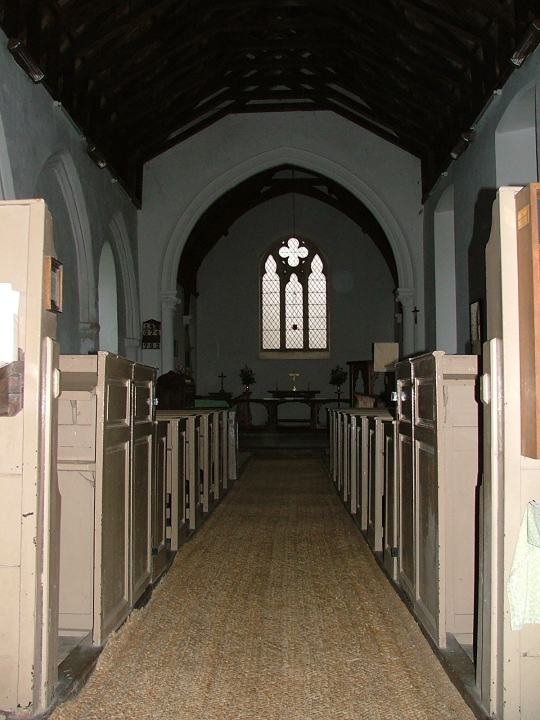
A parcel of secondhand books arrived at my door wrapped up in pages from The Guardian, 9 February 2009. I unravelled the newspaper and was particularly interested in the Country Diary feature by Mark Cocker. It was about Claxton, a small village on the Yare in Norfolk, a few miles up-river from Bramerton, where I spent my teenage years. I can still smell the beautiful scent of the rush matting in St Andrew's Church in Claxton!

As readers of this blog will know, I was captivated by Cocker's Crow Country, which you can buy via my Amazon widget to the right of this page. In the Guardian column, Cocker ponders the origin of the name, godwit, and offers the evocative local alternate, yarwhelp.

Wednesday, 4 February 2009

Surprise Subjects (1): Sugar Poetry

I try to keep an eye open for unusual poetry collections. The latest one to catch my eye is The Sugar Poetry Book: images and insights from a sugar era. The book is a poetic response by the Kittisivian and Nevisian islanders to the history and decline of the sugar industry in a part of the world that has seen so much change over the centuries.

I grew up in rural Norfolk, UK, where the view along the river Yare was dominated by the sugar beat factory at Cantley (for our sugar was beat, which can now be used as a bio-fuel). When my family moved to East Anglia in the 1970s, coypu roamed the river banks near our home. I feel a certain wistfulness when I think that these creatures are no longer there, but I know that they did immeasurable damage to the beautiful but fragile waterways and wildlife habitats of Broadland.

Postscript 4 February 2009: a penduline tit was spotted at Strumpshaw near Cantley. Source: Rare Bird Alert.

Monday, 5 January 2009

Swarm: when worlds collide

Followers of my blog will know just how much I enjoyed Mark Cocker's book, Crow Country in 2008 (see bookshelf below). I was fascinated by his intricate descriptions of airborne corvids along the river Yare in Norfolk, where I was privileged to spend part of my childhood. It will come as no surprise that when I saw a TV listing for Swarm: nature's incredible invasions, I was keen to watch the programme. (BBC1 Sunday 4 January 2009 - with part two next Sunday: click link for BBC iPlayer)

In terms of photography it certainly met my expectations. We saw locusts and crabs, starlings in Rome, mayflies in Winsconsin, mice in Australia - quantities of mice - and cicadas in the USA, to name but a few examples of the swarm phenomenon. We were introduced to an entomologist who was covered from head to toe in honey bees. He had been studying the species, and knew how to behave like their queen! We saw midge cakes - or rather burgers - in Africa, which apparently are very popular in some regions, and full of protein.

I wonder what delights are left in store for programme two: rats, spiders and jellyfish perhaps ...

Tuesday, 16 December 2008

Congratulations, Wendy!


Wendy (left) and Caroline outside the Dylan Thomas Centre, Swansea
Summer 2008


Well done, Wendy!

Wendy Webb, editor of 'Tips', the magazine of Norfolk Poets and Writers, has won a 2008 '1st in Class' Writers' Grand Circle Rosette award from the Writers' Grand Circle (WGC) for her small press magazine. The WGC is an organization that 'developed from a successful writers' group formed in 1971.'