Showing posts with label castles. Show all posts

Wednesday, 9 November 2022

Fingerstone Poem Quoted in 'The Maker', The Charles Causley Literary Blog


Launceston Castle

Those who know me will be aware of my love affair with Cornwall. It is a county I have visited all my life, initially to spend time with relations who lived at Widemouth Bay on the north coast. I recall many days further south, not far from the Helford River in the 1970s and 80s, enjoying occasional walks along Frenchman's Pill and the tree-lined watercourses that inspired Daphne du Maurier's Frenchman's Creek. I began to discover other writers who made Cornwall come alive on the page: Charles Causley, Thomas Hardy, R.S. Hawker, Anne Ridler, Jack Clemo, W.S. Graham, John Betjeman, Ursula K. Le Guin and Lionel Johnson, to name but a few. 

I forget how I first encountered the poems of Charles Causley, but I was immediately drawn to them. And indeed, I have found some firm favourites among his body of work, favourites such as 'Who?', with its brilliant repetition in line 1 of the first stanza, and 'Morwenstow', in which the speaker interrogates the sea on the subject of its wildness. I have visited Causley's hometown of Launceston a couple of times in recent years and have enjoyed exploring the castle, which dominates the scene. I even tried to do a quick pen-and-ink sketch of it.

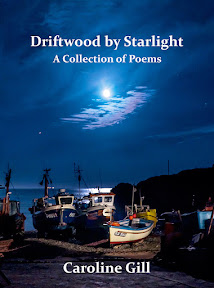
I was delighted when Sue Wallace-Shaddad asked me if she could include a few stanzas from 'Penwith Fingerstone', one of my Cornish poems, in her November post for The Maker, which you can find on The Charles Causley Literary Blog. The poem, which features in Driftwood by Starlight (The Seventh Quarry Press, 2021), was awarded Third Prize by Brian Patten in the 2017 Milestones Poetry Competition, administered by Write Out Loud. As it happens, I posted a photo (here) of the fingerpost on Twitter a few days ago for #FingerpostFriday.


Monday, 3 August 2009

Window on Wildlife (6): (Not a) Lizard...


Kilchurn Castle on Loch Awe, Scotland
  • Lizard?
  • Castle (with David)
  • Orchid
We drove past this wonderful loch-side castle en route for the isle of Skye last year. It was one of our regrets that we did not have time to stop, so this year we made a point of including Kilchurn on our Scottish itinerary. The castle was built by Sir Colin Campbell in the middle years of the 15th century. Recent research into masons' marks indicates that some of the masons who worked on Rosslyn Chapel may have moved on to exercise their skills at Kilchurn.

It was rather dull weather when we there, but I found some colourful views on Google Images.

The orchids were truly amazing in their beauty and abundance. I recall my school days in Kent when it was considered a red-letter day if we spotted an orchid in the wild. However, my excitement at seeing these flowers was surpassed on this occasion by the delight at finding and photographing the small lizard. I have occasionally seen lizards in the wild (we once found one in our back garden before we moved to our present house), but this lizard was so colourful. I have looked on the internet, and it may just be a Common Lizard; but its markings seem a little unusual. I kept coming across the Red Eft on the web, but I have a hunch that this was a lizard and not a young newt.

STOP PRESS: My thanks to Chris, the Co-ordinator of the Sand Lizard Captive Breeding Programme and Administrator of RAUK (www.herpetofauna.co.uk) for telling me that my

'first assumption of a Red Eft is closest. It is, in fact, a juvenile newt.'

The fact that the pale stripe down the back continues to the tail apparently suggests that the creature is a juvenile Palmate Newt.

Saturday, 25 July 2009

Beautiful Birds (12): Gannets at Bass Rock


Here is a short video of the gannets at Bass Rock off the East Lothian coast of Scotland. The footage was taken by David Gill from Tantallon Castle. You might like to read about my Bass Rock literary links on my Land&Lit (Landscape and Literature) blog here.

The gannets and the puffin in my photograph were taken at Bempton Cliffs in Yorkshire last Easter.

Monday, 20 April 2009

Beautiful Birds (6): A red star weekend


You have heard of a red letter day: well, this was my redstar(t) weekend!

Thanks to Mistlethrush, Matt at Polyolbion and other birding bloggers, I am slowly learning my 'A(vocet), B(uzzard), C(arrion crow)' alphabet of the world of birds.

We had great fun watching about three pairs of Redstart (I presume that is the plural: please feel free to advise!) in the grounds of Dinefwr Castle. I tried my best to photograph them; but (assuming my identification is correct), the Redstart does not hang about and my best photograph was blurry, to say the least. The birds flitted backwards and forwards in pairs, along the waterline and then up in the trees. The males, in particular, were a joy to watch, with their black 'cheeks', silver foreheads and bright russet feathers.

Down at the Wildfowl and Wetlands Trust in Llanelli, we saw and heard a number of warblers (and once again, Mistlethrush, I wish you had been there to help!). I should be particularly interested to learn the identity of the pair in the photo above.

Incidentally, I wonder what rules we follow in the UK when we write about specific examples of flora or fauna, using our English names. Do we adopt Seabrooke's sensible system of using captial letters for these words? I was writing about the Smooth Newt on my Land&Lit blog, when I realised that unless I used upper case it would not be clear whether I simply meant a smooth newt of any variety or whether I meant the Smooth Newt, Lissotriton vulgaris (formerly known as Triturus vulgaris), in particular.

There is a Swansea suburb called Sketty (Sgeti in Welsh); some sources claim that the name means Ceti's Island, after an Irish saint. Cetti's Warbler, however, is named after the Italian zoologist, Francesco Cetti. I am grateful to Matt of Polyolbion for reminding me to look out for Joanna Boulter's Arrowhead poetry collection, On Sketty Sands.

Monday, 19 January 2009

RSPB 30 Countdown


The countdown is really underway for the RSPB Big Garden Birdwatch 30 this coming weekend. There have been more UK sightings of the Snowy Owl. The Weaver of Grass has posted a fine poem about a merlin. I spotted a red kite over the weekend in Carmarthenshire, my first one in 2009. I also noticed two little egrets enjoying the flood plains by Dryslwyn Castle.

Monday, 12 January 2009

On your bus: the Minotaur Muse

Left: shadow

One of the first myths (after the story of Odysseus) to appeal to me was the story of Theseus - and the Minotaur who lived in the Minoan labyrinth.

My eye has just alighted on the BBC feature on 'labyrinthine' poems, which are to appear inside the Unibuses in Kent. Jeff Saward was responsible for creating the Canterbury labyrinth as an inspirational pathway. I would like to adapt the idea (since I do not have a labyrinth in my area), and have a go at trying to write a poem in motion i.e. as I walk about.

Friday, 27 June 2008

Of poppies and poetry


It was interesting to see the war memorial, featuring the name of Lieutenant Colonel John Alexander McCrae (1872-1918) at Eilean Donan Castle, not far from the Skye Bridge. Canadian born McCrae wrote one of the best loved poems about the Great War, In Flanders Fields.


The setting of Eilean Donan is quite magical - even in the rain!

Otters on Skye

We spent hours on Skye, gazing across the lochs in the hope that we would see an otter.

The first otter we saw was made of bronze! It was the work of Laurence Broderick, and the otter in question was Gavin Maxwell's Teko. The sculpture by Kyleakin harbour was donated to the Eilean Bàn Trust for the Bright Water Visitor Centre.

We thought we caught sight of a real otter in the harbour at Kyleakin; but as you can see, the intense, atmospheric light was not at its best for otter-spotting! The 'creature' appeared and disappeared along the floating seaweed strands to the right of Caisteal Maol (Castle Moil or Moyle).

The castle probably dates from the 15th century, but the Saucy Mary version of its origin is far more compelling.

Postscript: in the course of finding out about Broderick, I came across the site on Blaven, one of the munros on Skye. It has features on the John Muir Trust and early postcards of Skye.