Tuesday, 17 August 2021

DRIFTWOOD BY STARLIGHT: Questions from Maria Lloyd (2)


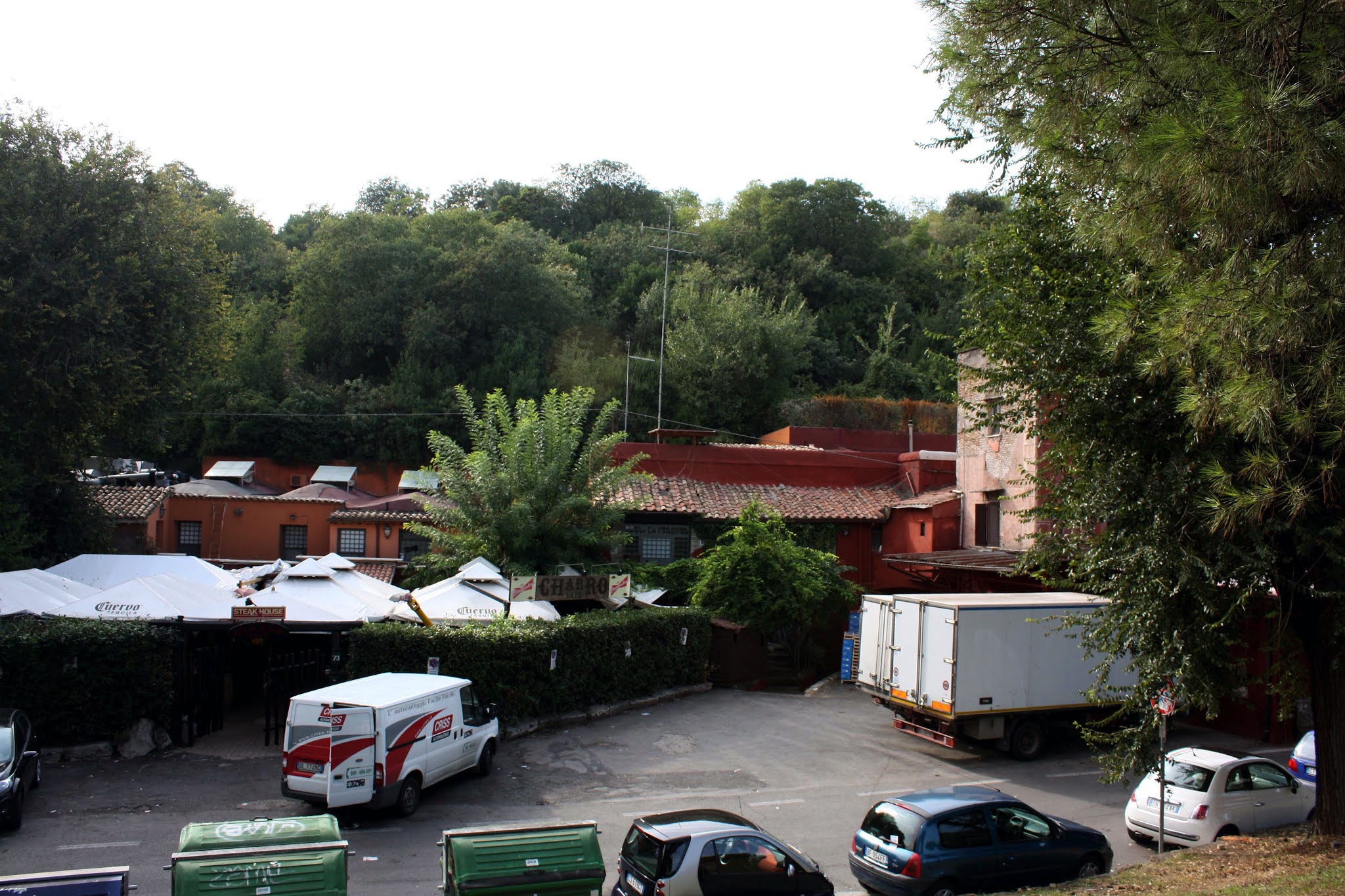
Photos from my album, taken (pre-digital!) in Pompeii, February 1986

Driftwood by Starlight, my first full poetry collection, was launched online on Tuesday 3 August. The book was published in June 2021 by Peter Thabit Jones of The Seventh Quarry Press. It can be purchased for £6.99/$10 from the publisher's online shop here.  


Maria Lloyd, who holds a Masters degree on The City of Rome from the University of Reading, read the collection and decided to set me some questions about it. I am attempting to provide answers (without giving too much away ...). 

Thank you, Maria.  

The first post in this mini-series on the blog (click here) concerned my poem 'Monte Testaccio, Mound of Potsherds' on p.35 of the collection.

This second post concerns the poem, 'Wildfire', on p.31. Page numbers in this post refer to Driftwood by Starlight. Let's turn to Maria's questions.

From Maria Lloyd: p.31 'Wildfire'
[Q1] Is this poem based on a specific individual part, or parts of Pompeii that fascinate you and have been combined? 
[Q2] Is your repetitive use of 'I wonder who will live and who has died' something that interests you?
[Q3] What is your process in writing poetry? You appear to write many different types of poems. How did you land on the format of each poem?
Once again, here is a little background information before I attempt to offer specific answers. David (Gill), my archaeologist husband, was a Rome Scholar at the British School at Rome in the mid-1980s. We had recently married and were to spend that year living in the School, where I washed bones and sherds of pottery in my spare time. The railways offered what was known as a Biglietto Chilometrico, a pass for 1000 kilometres. 
We left Rome by train on a snowy morning in February 1986, and arrived in Naples that afternoon. Vesuvius was coated in snow and we were bitterly cold. However, we made the most of our few days in the area, visiting Pompeii, Herculaneum and the Museo Archeologico Nazionale di Napoli. 
 
Photo: © Caroline Gill 1986
 
We moved south to Reggio before crossing the Straits of Messina (in the train, on the ferry). We landed in Sicily only to find Etna bathed in warm sunshine. We cast off our winter coats and feasted on gifts of juicy oranges.
Perhaps I should backtrack at this point. I spent my junior school years in Kent, not very far from Lullingstone Roman villa, which we visited on a school trip. As a dog-lover, I was fascinated by the Roman paw-prints I saw in bits of tile (and if my previous post alluded to cats, this one will give a nod to the dogs of the Roman world). 
 
Pawprints in tile, Lullingstone Roman Villa. Photo: © Caroline Gill

Almost ten years later I was able to visit the Pompeii AD79 exhibition at the Royal Academy in London, this time on a secondary school trip. I had not studied any Latin at that point, but I knew about the 'CAVE CANEM'/'Beware of the dog' mosaics, such as the one (with these words) at the entrance to the House of the Tragic Poet in Pompeii shown below, or the guard dog mosaic (without words)
from the House of Orpheus. 
 
'CAVE CANEM' mosaic, Pompeii. Photo: © David Gill
 
I went on to study aspects of Pompeii and Herculaneum at university, but it was not until our year (1985-6) in Rome that I was able to see these sites for myself.  
Let's turn to the first question. 
[Q1] Is this poem based on a specific individual part, or on parts of Pompeii that fascinate you and have been combined? 
My 'Roman dog encounters' mentioned above comprise one of several strands that unfurled as I studied (and went on to teach) aspects of classical civilisation, bringing the ancient world to life in my mind's eye. I mention 'life' and yet, of course, when it comes to the devastation caused by the volcanic eruption, we are talking 'death', a fact reflected in the title of the 2013 British Museum exhibition, Life and Death in Pompeii and Herculaneum. 
'Wildfire' was not especially based around memories of particular areas or aspects of the archaeological sites of Pompeii and Herculaneum; although, almost inevitably, some features* struck me, or pulled at a proverbial heart-string, more than others. Who would not be affected by the small details (a loaf of bread, for instance, left to smoulder in an oven in Herculaneum) that make the tragedy seem real to those of us who were not there as eye witnesses? 

David (Gill) in Herculaneum. Photo: © Caroline Gill
 
I have visited Eyam in Derbyshire where plague victims cut themselves off from surrounding villages in order to contain the disease. I have explored the remains of Scottish villages that were abandoned during the Clearances (my poem, 'The Ceilidh House' on p.16 alludes to this). Stones, graves and broken walls can tell a powerful tale, and sometimes these features are all we have to go on. 
But Pompeii and Herculaneum are different. We are, for example, confronted with the reality of normal aspects of life, including shopping (the Market of Macellum, a fast-food counter ...), art in the form of wall paintings and mosaics, garden features and so much more. It is as if the inhabitants have just gone out for a short while, leaving their stone guard dogs at the ready. 
And yet it is not at all like that. I find I only have only to stare at the plaster casts made from the remains of the people (see here; and also top right on this blog page for a photo of a figure, head in hands) and their animals (dog, boar or pig, and horse) to begin to sense something of the horror.
[Q2] Is your repetitive use of 'I wonder who will live and who has died' something that interests you?
[Q3] What is your process in writing poetry? You appear to write many different types of poems. How did you land on the format of each poem?
I am taking these two questions together, and will attempt to answer [Q3], at least in part, in relation to [Q2]. 
One of the exciting aspects of my poetry journey to date has been exploring the different ways in which 'form' and 'craft' can shape a poem, whether by 'form' I mean something named and specific like the Sestina, and my collection includes one of these ('The Figure at the Phoenix Mine', p.22); or something less precise, perhaps like an unrhymed couplet. 
The craft of poetry can be applied in numerous ways, some more tangible (the acrostic in an acrostic poem perhaps, like 'Et in terra pax', p.14), and some more subtle (for example, the deployment of sound-symbolism or contronyms). I was delighted back in 2012 to have three sample 'form poems' (a folding-mirror, a clang and a bref double with echo) included in The Book of Forms including Odd and Invented Forms by Lewis Putnam Turco (UPNE 2012). 
Let's turn more specifically to 'Wildfire'. This poem was written during the pandemic; it was not intended to be a 'happy' poem. Poets use the currency of metaphor and sustained metaphor. How much of my poem was actually about the eruption of Vesuvius in AD79? This is a question I continue to ask myself. 
What I knew from the outset was that I wanted the reinforcement that repetition would afford. 'Wildfire' is a villanelle (think: 'Do not go gentle into that good night' by Dylan Thomas). The form, allowing for only two rhyme sounds throughout, and the 'pared-back' nature of my theme seemed complementary. 
Maria, you highlight my line, 'I wonder who will live and who has died'. Images of those 103 heart-wrenching plaster casts (the child, the man crawling along the ground ...) were rarely far away, but I was also trying to understand what was behind the words written to Tacitus by Pliny the Younger, whose account of the eruption was discovered, or recovered, in the 16th century. Hence the epigraph at the top of my poem. 
I tried to absorb the text of the letter in translation and attempted to imagine what it might have been like not only for the Younger Pliny, but also for other survivors such as Cornelius Fuscus. Some of those who escaped asphyxiation from the pyroclastic flow at Herculaneum probably left by ship almost as soon as they became aware of the danger. 
At the time of writing (my records state I began to draft 'Wildfire' on 20 April 2020), I had been in lockdown for some weeks. My outlook was changing, and perhaps that was partly why the subject for this villanelle came to me at that particular moment of flux. People we knew were beginning to catch Covid. There was fear in the air and the virus seemed close at hand. 
I was delighted when Susan Jane Sims of Poetry Space accepted the poem for her anthology, Locked Down: poems, diaries and art from the 2020 pandemic, and I was able to read it at one of her online launches. 
So much of our knowledge concerning Pompeii and Herculaneum has arisen, phoenix-fashion, from the ashes of civilisation. Thank you, Maria, for your questions; I am left wondering what the current pandemic will teach future generations about the society in which we find ourselves.
 
* * *
 
* A few favourites ...
 
  • the spacious House of the Faun, with its mosaic of a Nilotic scene, displaying a crocodile, a hippo, a snake and various ducks. The mosaic is housed in the Museo Archeologico Nazionale di Napoli.
  • the fresco of Terentius Neo, a baker, and his wife, who holds a writing stylus to her lips and a wax writing tablet in her right hand. I would love to know what she had written or was about to write ... 
  • Fresco of garden scenes from the the north wall of the House of the Golden Bracelet. I am reminded of William Morris and his 'Strawberry Thief' design ...
  • a street with raised stepping stones to allow pedestrians to cross in safety, while allowing access for carts (see my photo below).
 
February 1986. Photo: © Caroline Gill


Herculaneum:
  • the artistic depictions of octopus and dolphins at one end of the black and white mosaic of the Triton (who bears what seems to be an oar) from the women's section of the Central Baths on Cardo IV.
  • the Villa of Papyri, with its bronze piglet. I gather this villa was owned by Lucius Calpurnius Piso Caesoninus, the father in law of Julius Caesar. 
  • the streets, which seem so real. Some of the adjacent buildings have a second storey.

Photo: © Caroline Gill


Monday, 9 August 2021

DRIFTWOOD BY STARLIGHT: Questions from Maria Lloyd (1)


Driftwood by Starlight, my first full poetry collection, was launched online on Tuesday 3 August. The book was published in June 2021 by Peter Thabit Jones of The Seventh Quarry Press. It can be purchased from the publisher's online shop here. 

Maria Lloyd, who holds a Masters degree on The City of Rome from the University of Reading, read the collection and decided to set me some questions about it. I shall attempt to provide some answers (without giving too much away ...) over the course of the next few posts. 

Thank you, Maria.  

This first post concerns my poem 'Monte Testaccio, Mound of Potsherds' on p.35. As I mentioned at the launch, this particular poem is intended to be something of a flight of fancy.

Let's hear from Maria on the subject of Monte Testaccio ...

  • I love your use of words associated with cats; 'prowl' 'flick' 'flit', the idea that cats prefer the rich.
  • Your use of ancient figures and terms is interesting: Antony, Cleopatra, bread and circuses.
  • [Q1] Can you explain paragraph 3 'fur shivering through you'?
  • [Q2] Can you explain: 'Testaccio reeks of centuries which nothing went to waste'?

Thank you, Maria, and before I attempt to answer the questions you pose, I would like to offer a little background information. 

David (Gill), my archaeologist husband, was a Rome Scholar at the British School at Rome in the mid-1980s. We had recently married and were to spend that year living in the School, where I washed bones and sherds of pottery in my spare time. By then I had taught Classical Civilisation A Level in two different school settings in the UK and had gained a qualification in the teaching of English as a Foreign Language (RSA TEFL). I believe this qualification is now known as a Certificate in English Language Teaching to Adults or CELTA.  

I was fascinated by the Ostiense area around the Piramide Metro station in Rome. My eyes were immediately drawn to the imposing pyramid tomb of Caius Cestius. You can read more about the tomb here. 


Pyramid tomb of Gaius Cestius, Rome.  Photo credit: © David Gill

The 'Non-Catholic Cemetery for Foreigners in Testaccio, Rome' was nearby. It contains a memorial stone to Keats, who died from TB at the young age of 25. 


Memorial to Keats, Rome. Photo credit: © David Gill
 

It has been documented that the poet wanted the words you see above as his epitaph: 'Here lies one whose name was writ in water'.


Memorial stones to Keats (left) and his friend, Severn (right). Photo credit: © David Gill
 

John Keats memorial plaque, Rome. Photo credit: © David Gill


Acrostic verse on the Keats memorial plaque, Rome. Photo credit: © David Gill
 

There is also a memorial tablet to Shelley, who drowned in a shipwreck off the Italian coast at the age of 29. The tablet bears the famous 'sea-change' line from The Tempest.


Memorial stone to Shelley, Rome. Photo credit: © David Gill

It is a well-known fact that Shelley's heart failed to burn when his body was washed ashore and 'cremated'; Mary Shelley kept his heart, which was found among her possessions after her death. Edward John Trelawny, who also gets a mention in my poem, was an author friend of Shelley's. Trelawny was able to identify the body of his friend on the beach.


Tombstone of Edward J. Telawny, Rome. Photo credit: © David Gill
 

There were often a lot of colourful cats in the area around Piramide Metro Station. It was some time before we realised that there was special provision for stray cats nearby. My reference to 'bread and circuses' was perhaps in part due to the free hand-outs the cats were receiving. It was, of course, also a nod to the satirist and poet Juvenal, who evoked Roman life so vividly (Juvenal, Satires, X. 70-81. Penguin translation here).

As a cat-lover, I have often observed how felines have a way of whiskering their way into unexpected places. A couple of the Testaccio ones sneaked into my poem.

Let's turn to [Q1] which concerns the lines in my poem that run as follows;

Can you feel the fur 

that shivers through you silently ... 

along those Tiber tales?

Those who live alongside cats will doubtless have noticed not only the occasional twitching, but also the rippling of fur, perhaps while the feline appears to be dreaming. When this rippling occurred in one of our cats, I sometimes wondered what was actually going on in her head. 

Science (see here for example) may offer its own answers to the question of animals and their ability to dream, but those who care for feral cats in Tel Aviv (see here) are of the opinion that cats do indeed dream, at least in certain phases of their sleep. I included the word 'Tiber' here since nearby Ponte Testaccio arches over the river. I also sensed a certain alliterative resonance between the river's name and the word 'tabby', which does not appear in the poem in an overt way. Curiously, some websites suggest that one of Queen Cleopatra's favourite cats was named 'Tivali', which would resonate pleasingly with 'Tevere', the Italian word for the Tiber (please let me know if you can verify this with a more reliable source).


Members of the feral cat colony. Photo: © Caroline Gill (1985)
 

The cemetery lies in the lee of a strange mound, known as Monte Testaccio. This mound is approximately 46 metres tall and is composed of amphora sherds. This fact is reflected in the name since 'testo' (Latin) and 'cocci' (Italian) both mean 'potsherd'. I check myself here on the grounds that 'sherd' and its alternative, 'shard', are considered words to avoid in modern poetry. However, and in my own defence, I only use the word 'Potsherds' in my translation of a proper noun in Italian! 

I will now attempt to answer [Q2] (see above). 


Monte Testaccio (in the background), Rome. Photo credit: © David Gill

Why I included the word 'reeks' ... 

We think immediately of synonyms such as 'smells' or 'stinks'. The word we know as 'reek' has an interesting etymology, linked to the Old Irish word, 'cruach', which leads on to the more familiar 'rick' (think: hayrick), implying a pile, mound, stack or stook.

Monte Testaccio, as I have mentioned, is composed of stack on stack of cast-aside amphorae. Most if not all of these clay vessels would have contained olive oil, surely one of the purest kinds of food imaginable. 'Purest', that is, until it turns rancid. Olive oil was not only a significant part of the Roman diet; it was also a useful commodity in terms, for example, of lighting and medicine.

I was perhaps influenced at the time of writing (and this poem was first published way back in 2003) by an increased awareness of the growing practice of 'taking things to the tip' or civic amenity site, with its mountains of landfill waste and accompanying odours. By this time I would have encountered the Tucson Garbage Project through conversations at the British School in Rome and through reports. My pot-washing activity in the 'Camerone' (a spacious archaeology room) at the School may not have been particularly challenging in terms of smell, but the water could look pretty grimy with washed-off sediment!

Perhaps at this point I should mention ‘garum’, the famous fish sauce, a popular and pungent part of Roman cuisine. There is a link here to an article attributed to Jason Daley on the Smithsonian website about it (and its presence in Israel).


It seems unlikely, at least from my reading on the subject, that amphorae containing garum were placed on the Testaccio mound. However, I find it interesting that Dr Elizabeth Bartman (of the archaeo-culinary Elifant Tours) specifically mentions potsherds found on Testaccio from Baetica, in what we would know as the south of Spain, 'most with olive-oil residues but some with traces of fish'.


Professor Amanda Claridge, who was Deputy Director of the British School at Rome during our year as residents, seems less convinced, however, that there is evidence for amphorae containing garum on the Testaccio site. In her book, Rome [1998] in the Oxford Archaeological Guides series, she asserts on p.367 that the surface of the mound ‘consists almost entirely of olive oil amphoras’, dating from 144 AD (with the exception of a slightly earlier sherd) to the middle of the third century. Professor Claridge points out that 'a core of older material must lie deeper in the hill'. Who knows what may yet come to light.


An article, 'Trash Talk' (Jarrett A. Lobell), in Archaeology, seems to suggest that there is currently no evidence for a (separate) mound anywhere in Rome comprising amphorae filled with garum. Professor Claridge indicates that there is scope for further study since commodities other than 'oil amphoras' must have 'passed through the port' of Rome.  


And finally we come to the last line of my poem. I decided to stick with the traditional form of the word 'perfect' in relation to feline taste (culinary and otherwise); but I can't say I wasn't tempted to insert an 'urr' in place of the more conventional 'er' spelling!


*

Also consulted: David Peacock and D. F. Williams Amphorae and the Roman Economy: An Introductory Guide (Longman 1986). 

My thanks to Maria Lloyd for setting me this task.

The next post in this mini-series concerns my poem, 'Wildfire', on p.31 of Driftwood by Starlight.


Tuesday, 3 August 2021

'Driftwood by Starlight' Online Launch

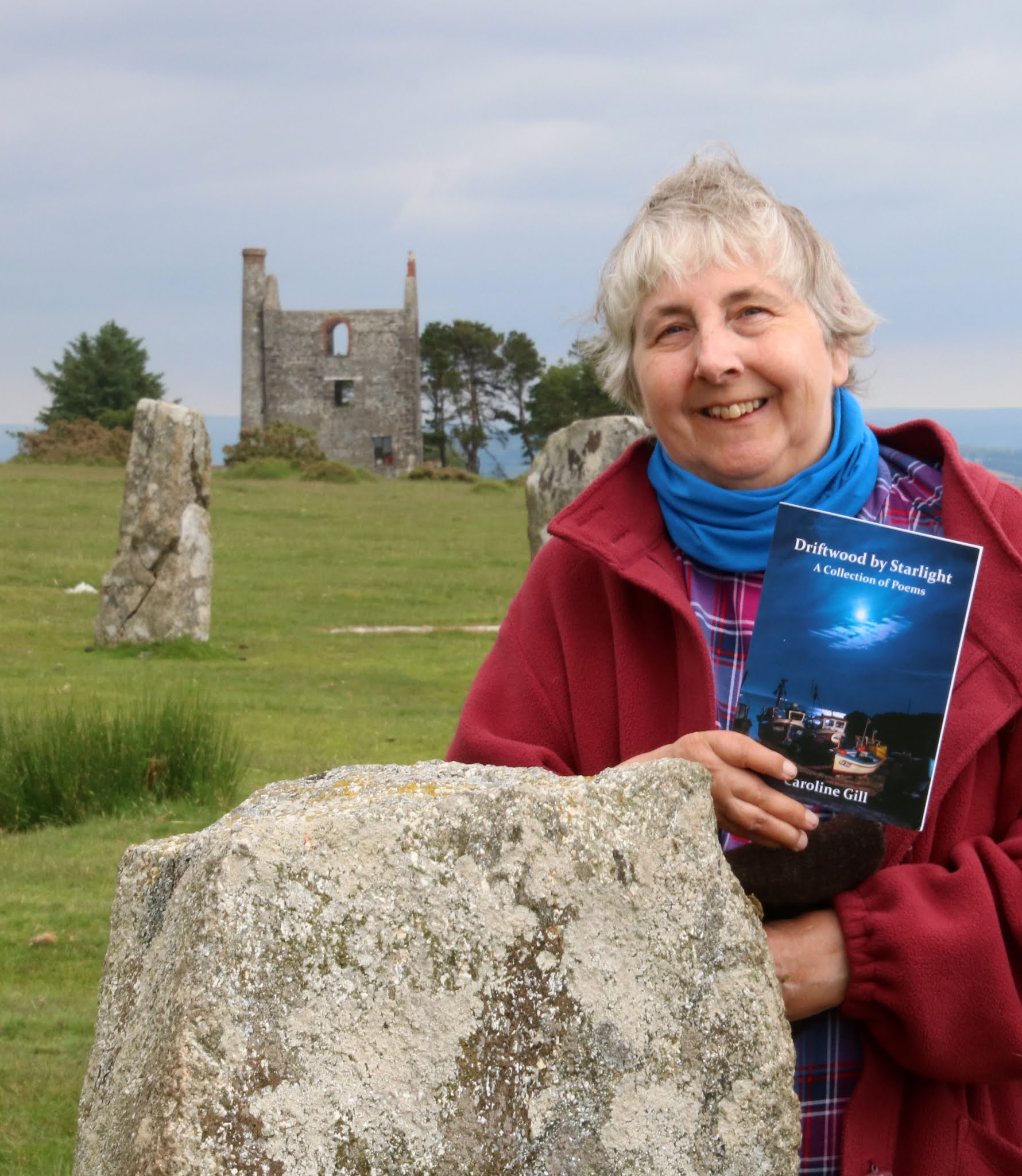
Tin-mining country, Minions Moor, Cornwall
 

My first full length poetry collection, Driftwood by Starlight (The Seventh Quarry Press, June 2021), is being launched via Zoom this evening, Tuesday 3 August 2021. 

Driftwood by Starlight can be purchased for £6.99 (UK price) from the online shop at The Seventh Quarry Press website - here.


Peter Thabit Jones, my publisher, will introduce The Seventh Quarry Press. I have invited Peter to read one of his 'Edward Thomas' poems in the first half. 

I will read a selection of poems (East Anglia, Wales, Cornwall ...) from the book. Guest readers, Susan Richarson and Jean Salkilld, will each read one of their poems. David (Gill) will also read one of his poems.

Jean's collection, The Familiar Road, was published by The Seventh Quarry Press in 2016. (The Suffolk poem Jean is due to read is not actually in this collection.)

Susan Richardson's poem comes from Words the Turtle Taught Me (Cinnamon Press, 2018), shortlisted for the Ted Hughes Award. 

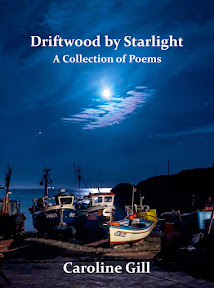
My thanks to photographer, Laurence Hartwell, for his night-time photograph of Cadgwith on the front cover.

Thank you also to Maria Lloyd whose questions about the collection will appear in a future post on my blog ... with my answers! 

Update, 4 Aug 2021: my sincere thanks to Juliet Wilson who has posted a review on her Crafty Green Poet blog here.


My poems included in the online launch:

  • The Serpentine Stile, p.9
  • Zennor Voices, p.19
  • Preseli Blue, p.37
  • Monte Testaccio, Mound of Potsherds, p.35
  • Treasure Hulk p.36 (For interest: the Scallop can be seen here.)
  • The Ocean's Tears, p.24
  • Isabella Tiger Moth Greets the Woolly Bear Caterpillar, p.34
  • Two Penguins and a Pebble, p.44
  • The Ceilidh House, p.16
  • Rhossili: Writing The Worm (extracts), p.38
  • Moonshine, p.27

 I refer to my two 'Edward Thomas' tribute poems. These are:

  • Lost, p.12
  • Dunwich in Winter, p.14

My poem, 'Rhossili: Writing The Worm', was first published in Hidden Dragons/Gwir a Grymus (Parthian Books, 2004) after I had taken part in The Write Stuff, a Disability Arts Cymru initiative. I attended launches at the Hay Festival, Ty Llyn/The Dyan Thomas Centre and the National Botanic garden of Wales. 


'Hidden Dragons/Gwir a Grymus' (Parthian Books) launch at the Hay Festival, 2004

  I have invited ...

Peter Thabit Jones to read his poem, 'The Edward Thomas Stone in Steep' from Peter's new book, GARDEN OF CLOUDS New and Selected Poems. You can read about it and buy a copy here. There are some sample poems here and here.

Jean Salkilld to read her poem, 'At Saint Edmundsbury Cathedral'.

David Gill to read his 'Adlestrop'-inspired poem, 'Gloucestershire in the Negev', first published in The Seventh Quarry poetry magazine (2008). See also here.

I refer to the poem, 'Words' by Edward Thomas. 


Launch day, Tuesday 3 August 2021
 

Caroline in Cadgwith, June 2021

My website: Caroline Gill: Poetry

Find me on Twitter: @coastcard

My chapbook: The Holy Place (2012), shared with John Dotson,  and published by The Seventh Quarry Press in conjunction with Cross-Cultural Communications, New York. John was the first poet-in-residence at the Robinson Jeffers Tor House Foundation in Carmel, California.

Wednesday, 21 July 2021

'Driftwood by Starlight' in Cornwall: (3) Zennor and the Mermaid

Zennor, the road to St Senara's church

Those of you who have read the last couple of posts will know that on our recent visit to Cornwall we revisited some of the settings for the poems in my new poetry collection, Driftwood by Starlight, published by The Seventh Quarry Press in Swansea, and available here at the UK price of £6.99.

The photo above shows me in Zennor, a village with many literary associations; writers from D.H. Lawrence to Helen Dunmore and Michael Morpurgo have written about this area. It features in one of my favourite poems, 'Zennor', by Anne Ridler (which I once requested successfully for BBC Poetry Please). It is also the setting for my poem, 'Zennor Voices', p.19 in Driftwood by Starlight.


The churchyard holds a number of interesting memorials. The one below is in memory of Dr William Borlase (1696-1772), Vicar of Zennor and well-known antiquarian.


This following photo shows a plaquel commemorating John Davey, one of the last fluent speakers of Cornish before plans were laid to breathe new life into the language in our own day.  


The slate sundial (1737), which adorns the south wall of the bell tower, bears the name of its maker, Paul Quick. Another local person to bear the surname 'Quick' was Henry Quick, also of Zennor, who was known for his poems.


And finally ... we come to the 'mermaid chair', linked to the local legend about a mortal man who fell in love with a mermaid. How does the story end?